


YanCoal Australia (YAL) remains one of the most cash-generative coal producers on the ASX, offering investors a high-yield, low-debt exposure to thermal and metallurgical coal markets.

McMillan Shakespeare (ASX: MMS) delivered strong FY2025 growth, driven by record customer retention, expanding EV leasing, and disciplined balance sheet management. Positioned for long-term demand in sustainable mobility, MMS offers recurring revenue, robust cash flow, and significant dividends.

Fleetwood Limited (ASX: FWD) is positioning itself as a major player in Australia’s modular construction and accommodation industry. Through its three divisions — Building Solutions, RV Solutions, and Community Solutions — the company has built a resilient, diversified business model capable of navigating cyclical shifts in housing, tourism, and resources.

We continue to view Accent Group (AX1) as one of the few genuinely scaled, defensible retail platforms in Australia and New Zealand. In a sector where earnings volatility is the norm and brand power often trumps execution, AX1 stands out because it has quietly built a multi-brand ecosystem that gives it pricing control, data-driven consumer reach, and operational leverage that smaller retailers simply cannot replicate.
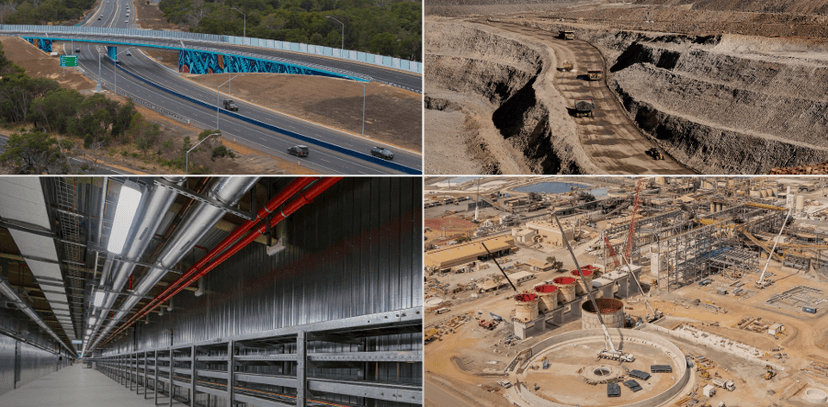
NRW Holdings is emerging from FY25 with strengthened financial performance, record order book visibility, and renewed momentum across its mining, civil, and MET (Maintenance & Engineering) segments. With EBITDA growing, margins stabilising, and a robust pipeline supported by long-life Tier-1 resources projects, NWH has entered FY26 well-positioned for continued earnings expansion. The company’s durability across cycles, combined with strong cash generation and rising recurring revenue streams, reinforces the investment case for long-term holders.
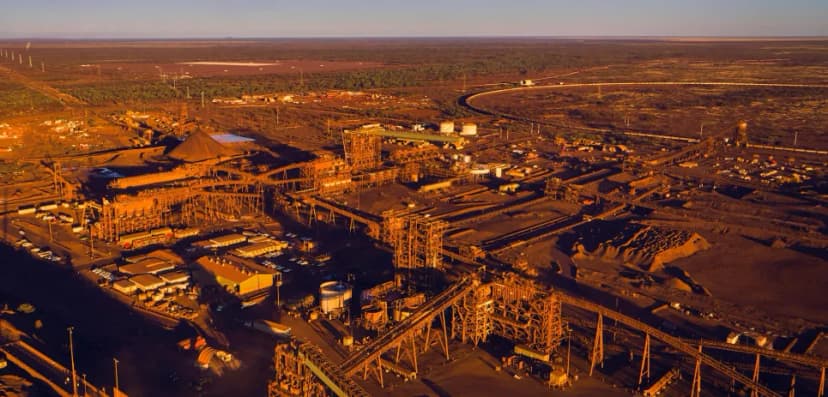
In our assessment, FMG is neither a simple iron ore beta nor a speculative green-energy experiment. It is a structurally low-cost, high-free-cash-flow industrial platform that deliberately uses surplus mining rents to accumulate long-dated strategic options in energy and decarbonisation. FY25 and the September 2025 quarterly update reinforce our view that Fortescue remains one of the most financially resilient miners globally, even as it operates in a more volatile commodity and macro environment.

We believe National Australia Bank (ASX: NAB) is entering a structurally more attractive phase of its earnings cycle, one that the market is only partially pricing. FY25 confirms that NAB has completed a difficult multi-year transition from remediation-heavy execution towards balance-sheet-led growth, operational leverage, and disciplined capital deployment. In our view, National Australia Bank is no longer just a “solid major bank.” It is increasingly a business-banking-centric compounder, with improving margin resilience, strengthening deposit mix, stabilising asset quality, and credible technology-driven productivity optionality.

When you track the ASX day after day, you eventually spot those moments when a stock stops drifting and suddenly kicks into gear. A clear breakout, the kind that pushes past weeks of hesitation, often tells you buyers are finally taking control. In this article, we’re looking at three Australian companies whose share prices have recently surged through key resistance levels. These aren’t just quick spikes or one-day wonders. Each chart shows a pattern of tightening ranges, rising volume, and a decisive move that suggests momentum may continue.

Recce has recently attracted attention because it’s advancing drug candidates against serious infections, a space with significant potential if late-stage trials succeed. That kind of promise is why some market watchers see upside in RCE’s shares. On the flip side, the company remains unprofitable, with no consistent earnings or predictable cash flow, so it’s still a speculative biotech rather than a stable performer.

When a share price breaks out after a long period of consolidation, it often signals a meaningful shift in market sentiment, marked by rising volume, improving momentum and former resistance turning into support. In recent weeks, several ASX stocks have shown these clean, technically supported breakouts, suggesting these are not short-lived spikes but structured moves that technical analysts closely watch as potential early signs of a new trend.
.webp&w=828&q=75)
Korvest Ltd (ASX: KOV) is a South Australian industrial manufacturer specialising in cable and pipe support systems and corrosion protection services, with earnings linked to infrastructure, resources, energy and industrial activity, as well as ongoing maintenance demand.

In the current markets, even major players listed on the S&P/ASX 200 aren’t immune to caution flags on the charts. In this article, we'll examine three ASX-listed stocks whose price action suggests further downside may be ahead. We’ll look beyond the fundamentals and focus on technical signals: breakdowns below key moving averages, chart patterns like lower highs or descending triangles, and weakening momentum indicators.
.webp&w=828&q=75)
Markets faced a “soft-landing but sticky” backdrop: growth held up, yet inflation and policy uncertainty kept risk elevated and dispersion high. The US stayed resilient but uneven as labour demand cooled and the Fed remained cautious. The ECB stayed meeting-by-meeting. Australia felt higher-for-longer, rotating into defensives.

Atlantic Lithium has managed to hold its uptrend despite broader market turbulence, a sign of underlying strength in a weak environment for resource stocks. Steady buying at key support levels suggests confidence has not collapsed, supported by progress at its Ewoyaa lithium project in Ghana. This combination of solid fundamentals and constructive chart behaviour highlights resilience in a volatile, sentiment-driven sector.

Talga Group is positioning itself as a cornerstone of Europe’s sustainable battery supply chain through its integrated mine-to-anode model in Sweden. With its Luleå anode refinery approaching production readiness and government-backed funding in place, Talga is moving from concept to commercial reality. The company’s low-carbon Talnode® products target the fast-growing EV and energy-storage markets, offering a differentiated, locally sourced alternative to Asian graphite imports.

Arafura Rare Earths (ARU) is progressing its flagship Nolans NdPr Project in the Northern Territory — a fully integrated mine-to-separation operation targeting strategic electrification supply chains. With formal government backing, advanced engineering progress, and off-take partnerships in motion, ARU is positioning itself as a critical rare-earth supplier to global EV and wind OEMs.

Arafura Rare Earths (ASX: ARU) is trading near a key support zone after recent volatility, where buyers have previously stepped in. Strength in rare earth prices adds sector momentum. While this mix may signal opportunity, confirmation depends on support holding and the company delivering meaningful project progress.

Liontown Resources (ASX: LTR) is a next-generation lithium developer advancing toward production at its flagship Kathleen Valley Project in Western Australia. With Tier-1 offtake partners and strong financial backing, Liontown is poised to become a key player in the global EV and battery supply chain.

Larvotto Resources Limited (ASX: LRV) is an Australian emerging mining company transitioning from explorer to near-term producer. Its flagship asset, the Hillgrove Antimony–Gold Project in New South Wales, positions the company as a potential supplier of two strategically important metals: gold—a monetary safe-haven—and antimony, a critical mineral used in batteries, semiconductors, and defense alloys.

Race Oncology (ASX: RAC) is executing on a bold clinical strategy centered on RC220 (bisantrene reformulation), targeting both cardioprotection and enhanced anticancer activity in combination with doxorubicin. The company has dosed its first patient in a Phase 1 solid tumor trial, expanded into South Korea, and strengthened its clinical leadership team, all while maintaining disciplined cash management (A$13.67m at June 2025) to fund operations into 2026. Though early-stage, RAC presents a compelling mid- to long-term optionality scenario for investors with conviction in cardio-oncology and specialty chemotherapy.

European Lithium is positioning itself as a future supplier of battery-grade lithium to Europe, with the Wolfsberg Project in Austria advancing through permitting, engineering, and early-stage financing activities.

BrainChip is a pioneer in ultra-low-power, neuromorphic AI processing, anchored by its Akida spiking neural network architecture. With US$13.5 million cash as of June 2025, the company is funding aggressive commercialisation efforts, including next-gen Akida 2.0, Pico devices, and defence / edge-AI partnerships. While financial performance is still pre-profit, recent commercial wins, deep IP protection, and product roadmap momentum provide compelling optional upside. Key risks include cash burn, technology adoption, and scaling edge-AI deployments.

We view Invictus Energy as a rare example of an explorer with a clear pathway to development in one of Africa’s last underexplored rift systems. The Mukuyu gas-condensate discovery in Zimbabwe’s Cabora Bassa Basin anchors the portfolio, while high-impact follow-up at Musuma-1 and a strategic financing partnership with Al Mansour Holdings (AMH) materially de-risk the next stage of value creation.

Zip closed FY25 with what we consider a genuine inflection point: a record A$13.1bn in TTV and A$170.3m of group cash EBTDA — a level of profitability that would’ve sounded fanciful 18 months ago. The US arm is now the locomotive of the group, while ANZ has quietly rebuilt its margin spine. Momentum spilled straight into 1Q FY26, with TTV of A$3.9bn and cash EBTDA of A$62.8m, prompting management to hike US TTV guidance and expand the buyback to A$100m.

Investigator Silver (ASX: IVR), formerly known as Investigator Resources, is moving through one of the most strategically important phases in its history. The company is advancing the Paris Silver Project, Australia’s highest-grade undeveloped primary silver deposit, while simultaneously delivering exploration wins across its 100%-owned Peterlumbo tenement and progressing copper-gold targets at Uno Morgans.

The small-cap medical-tech company, Control Bionics, has just taken steps that could catapult it far beyond its current size. Its core product, a wearable sensor that translates even the faintest muscle or nerve signals into computer commands, is already approved and helps people with severe physical disabilities communicate and interact. Recently, the company announced that it had integrated a significant tech giant’s brain-computer interface protocol into its devices.

Cettire (ASX: CTT) share price recently had a breakout. But it is in a bit of limbo; enough promise remains that a rebound could be on the cards, but enough uncertainty that it’s far from a safe bet. On one hand, the company is forecast to post healthy earnings-per-share growth over the next few years and has a pretty low price-to-sales ratio compared with peers, suggesting some latent value. On the other hand, consensus analyst targets hover modestly, some even see a drop, and many believe any upside beyond roughly one Australian dollar a share depends on improvements that aren’t guaranteed.

Sunrise Energy Metals (ASX: SRL) is advancing one of the Western world’s most strategically significant battery-materials developments: the Sunrise Nickel-Cobalt-Scandium Project in NSW, a globally large, long-life, ESG-aligned source of critical minerals essential for EVs, aerospace alloys, defence technologies and high-performance fuel cells. Backed by strong balance sheet discipline, rising government engagement, escalating Western supply-security policies, and material advancement across strategic partnerships during 2025, Sunrise enters 2026 with a profile we view as deeply undervalued relative to its strategic optionality.

LaserBond (ASX: LBL) has entered a structurally stronger period after FY25 delivered clear evidence of operating leverage, improved manufacturing efficiencies, and accelerating adoption of its surface-engineered technologies across mining, energy, defence, and agricultural markets. With its patented LaserBond® cladding and composite coating systems now demonstrating superior lifecycle economics versus traditional wear-resistance methods, the company is positioned as a high-margin engineering solutions provider rather than a cyclical industrial.

We believe CSL Limited (ASX: CSL) remains one of the highest-quality global healthcare franchises listed on the ASX, with FY25 marking a clear re-acceleration in earnings quality, cash flow conversion, and strategic clarity. While the share price has periodically struggled to reflect this underlying strength, we view CSL as misunderstood rather than mis-executing.

Every so often, the market serves up a handful of charts that practically nudge you to take a closer look. You know the type, steady higher lows, clean breakouts, and that subtle shift in momentum that hints at a story unfolding beneath the surface. In this piece, we’re turning the spotlight on three ASX-listed stocks whose price action has been speaking in a clear and confident tone. These aren’t wild speculative swings or one-off spikes; they’re structured uptrends that have earned their place on watchlists through consistent behaviour.

The Australian share market has a habit of sending quiet signals before a move actually happens. One of the most reliable of those signals is bullish divergence, a moment when price looks weak, but momentum quietly starts to improve. In this article, we’ll take a closer look at three stocks listed on the (ASX) that are currently showing confirmed bullish divergence patterns.

Megaport has evolved from a cash-intensive growth story into a more disciplined, cash-generative digital infrastructure business, with FY25 marking a clear structural turning point as costs reset, churn stabilised and balance-sheet risk reduced. While the market still views the company through outdated perceptions, we see improved unit economics, renewed credibility and emerging operating leverage, positioning Megaport for growing free cash flow and ongoing relevance in an increasingly hybrid, multi-cloud world.

Xero is transitioning from a high-growth SaaS accounting platform into a global small business operating system with improving earnings quality and rising operating leverage. FY26 interim results show resilient revenue growth, margin expansion from cost discipline, and deeper monetisation across payments, payroll and financial services. We believe the market still applies an outdated growth-at-any-cost lens, underestimating Xero’s emerging cash generation and embedded optionality.

SportsHero (ASX: SHO) is an early-stage Australian sports gamification and media company focused on mobile-first prediction and gaming platforms across Southeast Asia, primarily Indonesia. It offers leveraged exposure to regional digital gaming growth but carries high execution, funding and profitability risk typical of small-cap platform build-outs.

Waratah Minerals, an Australian gold-copper explorer in NSW, has rebounded strongly from last year’s lows. A clear pattern of higher lows suggests growing accumulation, easing selling pressure and sustained market interest, positioning the stock to potentially break higher if a catalyst emerges.

Atomo Diagnostics (ASX: AT1) is showing a steady uptrend after a long quiet phase. Rising prices from recent lows, backed by stronger volume, suggest buyers are gradually absorbing supply. This persistent move higher points to improving sentiment and a technically supportive trend for now.

Appen Limited (ASX: APX), founded in 1996 and listed since 2015, is an Australian AI data specialist providing dataset sourcing, annotation, and model evaluation. Operating the Global Services and New Markets segments, it serves major tech clients across multiple industries, leveraging a 1M+ global workforce that spans 180+ languages in 130 countries.

European Lithium (ASX: EUR) has rebounded from a well-established support level on its daily chart, a move that suggests buyers continue to defend this key zone. While the company’s Wolfsberg project underpins its long-term European battery supply narrative, the recent lift is largely technical, driven by market psychology and historical buying interest.

We see HY2025 as the first genuinely credible step in EVO’s multi-year turnaround. Not a cosmetic clean-up. Not a one-off bounce. A real shift. Occupancy is climbing, labour stability is improving, centre-level margins are widening, and cashflow finally has the shape of something we can underwrite. Management has been making tough decisions — cutting deadweight centres, fixing staffing inconsistencies, and rebuilding trust in local communities — and the P&L now reflects it.

We believe Collins Foods (ASX: CKF) is entering a multi-year earnings recovery cycle anchored by margin repair in Australia, operational rejuvenation in Europe, clear line-of-sight to double-digit EBITDA growth, and an improving balance sheet that gives management options rather than constraints. The HY26 results demonstrate that CKF is moving decisively out of the inflation shock period that suppressed margins and elevated operating costs between 2022–2024. With commodity and utilities inflation easing, labour efficiencies improving, and price/mix still resilient, we see structural tailwinds forming beneath the company’s operating base.

We view Telstra as a highly resilient, structurally advantaged cash-generating business within the Australian equity market, offering strong earnings quality and downside protection despite limited headline growth. Its focus on network leadership, disciplined capital management and monetisation of digital and infrastructure assets supports stable free cash flow and reliable capital returns, particularly in a softer macro environment. We believe the market continues to undervalue Telstra’s leverage to long-term data demand, the durability of its mobile economics, and the embedded optionality in InfraCo and enterprise digital services.

Transurban is a high-quality global infrastructure franchise with long-duration, inflation-protected cash flows, strong pricing power and irreplaceable assets. The market remains overly focused on macro headwinds, overlooking the durability of its concessions, recovering mobility and improving cash-flow conversion. As operational risk declines and cost pressures fade, Transurban is well positioned to deliver asymmetric upside through FY26–FY28 via compounding distributions and operating leverage.

Commonwealth Bank of Australia (ASX: CBA) remains the undisputed heavyweight of the Australian financial system, dominant in retail banking, advantaged by scale, and well-positioned to monetise the next phase of household re-leveraging as rates peak and credit growth stabilises. Our view is simple: CBA’s franchise resilience is undervalued. While the macro backdrop remains mixed and competition in mortgages remains intense, the bank continues to deliver sector-leading returns, defend margin leadership, and maintain one of the strongest balance sheets globally.

Rio Tinto appears to be entering a strategically attractive new phase, evolving beyond its historic reliance on Pilbara iron ore into a diversified, multi-commodity growth platform. With expanding exposure to copper, lithium, high-grade iron ore and aluminium, alongside a stabilising cost base and strong balance sheet, the company increasingly looks positioned for asymmetric upside through 2026–2028 rather than a mature, iron ore–centric producer.

With gold having already made a massive rally, there are reasons to believe copper is the next on the line to experience long-term price jumps. ASX copper stocks are set to benefit from this expected long-term rise in copper prices.

Last week, Australian financial markets and economic sentiment were shaped by persistent domestic inflation, a cautious stance from the Reserve Bank of Australia (RBA) and mounting global headwinds.

Publicly listed companies engaged in the exploration, mining, and production of gold offer a dynamic way to preserve your money's value and potentially amplify your gains as the price of the precious metal climbs.

Global markets rallied on hopes of a resolution to the U.S. government shutdown, though the Fed's caution dampened expectations for a December rate cut. In Australia, robust employment data and a resilient labour market have reduced near-term expectations of an RBA rate cut. The ASX posted its weakest week in four months amid sector rotation and global tech selloffs.

The global macroeconomic backdrop shifted notably in the week ending 23 November 2025, contributing to a significant risk-off sentiment that heavily impacted Australian equities. In the United States, a mixed labour market report showing rising unemployment alongside stronger-than-expected job additions, combined with firm Services PMI data and Federal Reserve minutes signalling a delay in rate cuts, led to a repricing of interest rate expectations.

Australia is increasingly important in the global REE supply chain as countries seek alternatives to China’s dominance. Key companies on the Australian Securities Exchange (ASX) are standing out thanks to substantial deposits, processing capability, and strategic supply-chain links. Leading the pack is Lynas Rare Earths Ltd (ASX: LYC), which mines the high-grade Mount Weld deposit in WA, has processing facilities outside China and is among the few globally capable of turning ore into refined products. Australia has the raw materials; the companies that control both the mines and the processing stand to benefit most.

The global macroeconomic backdrop shifted notably in the week ending 28 November 2025, fuelling a renewed "risk-on" sentiment that propelled a decisive recovery in Australian equities. In the United States, softening labour market indicators—specifically an acceleration in weekly ADP job losses—combined with a cooler-than-expected Core PPI reading and dovish commentary from Federal Reserve officials, led to a sharp repricing of interest rate expectations, with markets now pricing in an ~85% probability of a December cut. This pivot abroad overshadowed sticky domestic inflation data, allowing interest-rate-sensitive growth sectors to lead the S&P/ASX 200 higher, even as uncertainty persists around the Reserve Bank of Australia’s policy path.

Lithium prices are rising again, which tends to lift investor interest in ASX-listed producers. Thanks to growing demand for batteries (EVs, energy storage) and tightening supply, analysts suggest the recent price upswing, roughly 20–25% month-on-month, may mark a turning point. In that context, some ASX companies with solid operations and cash flow stand out as offering relatively better risk-adjusted opportunities. Still, it’s not a guaranteed path: lithium remains a volatile commodity, and gains now reflect renewed optimism rather than long-term certainty.

When you spend enough time around the ASX, you start to notice a certain rhythm in how strong charts behave. Some stocks creep for weeks, building energy in tight ranges, and then, almost without announcement, they begin flashing early signs of strength. In this review, we focus on three ASX-listed companies whose price action suggests further upside.

Global data point to a softening but still mixed growth backdrop, with US manufacturing in mild contraction contrasted against resilient services activity. Labour indicators such as ADP employment and continuing jobless claims show cooling private hiring and more challenging re‑employment conditions, reinforcing expectations of earlier and deeper Federal Reserve rate cuts. Core US PCE inflation is running at a steady, moderate pace, allowing the Fed to stay on hold while waiting for clearer evidence that inflation is durably converging to the target.

Silver has quietly moved into a powerful uptrend, and it’s not happening by accident. The metal is being pulled in two directions at once, as a financial haven and as an industrial workhorse. For ASX investors, this creates an opportunity. Exposure comes through producers, developers, and explorers whose revenues and valuations tend to rise as silver prices strengthen, offering leverage to a market driven by both fear and future-focused demand.

Tin prices have been climbing sharply because the metal is suddenly caught between rising demand and tightening supply. Electronic devices, artificial intelligence hardware, solar panels and electric vehicles all rely on tin-based solder and components, pushing consumption higher just as long-neglected supply struggles to keep up. Production has been disrupted in key regions by political instability, mine closures and regulatory crackdowns, and underinvestment means new sources aren’t coming online fast enough. In this article we discuss some of the ASX stocks that can benefit the most from the rising tin prices.

Zinc prices are edging higher as physical markets tighten, supported by steady demand from steel, infrastructure and renewable energy projects alongside shrinking exchange inventories, particularly on the LME. With supply growth limited and visibility low, declining stocks are increasing concerns around future availability, which can underpin higher prices. For ASX investors, this environment favours zinc-exposed producers, developers and explorers, as well as diversified miners with meaningful base-metal exposure, all of which stand to benefit from improving project economics and margins as zinc’s outlook strengthens.

Global nickel prices have surged to near US$18,000 per tonne on supply concerns, particularly around potential production cuts in Indonesia and regulatory uncertainty. The rally has been amplified by speculative flows and broader base-metals momentum, despite elevated inventories and mixed demand fundamentals.
...