

Energy
.webp&w=828&q=75)
Hazer Group (ASX: HZR): Licensing Wins Pile Up as Shares Sit at a Key Support Level
Hazer Group (ASX: HZR) is pushing its capital-light hydrogen and graphite licensing model toward commercial execution, with a FortisBC facility underway and a new Japanese utility study won.

Ampol (ASX: ALD): $225m Evie Deal Plugs Fuel Giant into Australia's Electric Future
Ampol (ASX: ALD) will buy Evie Networks for $225 million, creating Australia's largest public EV fast-charging network by bays. The debt-funded deal targets $30 million-plus earnings within three years, pending ACCC clearance.
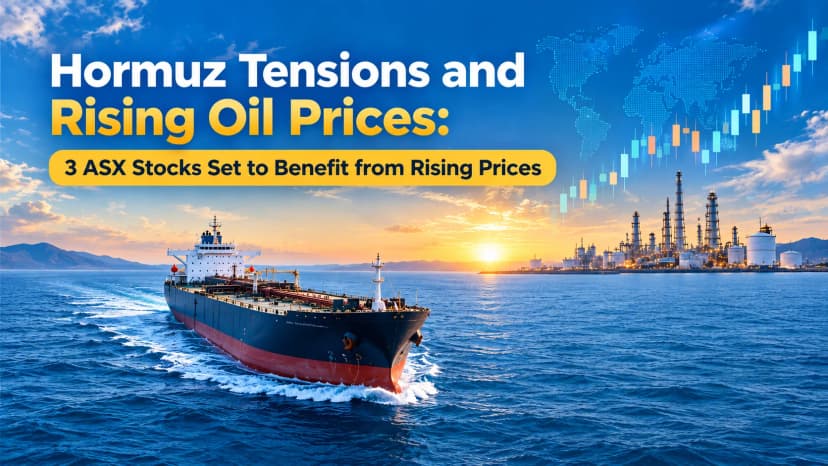
Hormuz Tensions and Rising Oil Prices: 3 ASX Stocks Set to Benefit from Rising Prices
Hormuz tensions are driving oil volatility, influencing Australia’s inflation and ASX performance. Woodside, Karoon Energy and Ampol offer exposure to higher energy prices or refining margins, but operational challenges, market turbulence and potential de-escalation remain key investment risks.

Viva Energy Group (ASX: VEA): Strong Half, But How Sustainable Are Earnings?
Viva Energy delivered a strong 1H26, with EBITDA and free cash flow surging on exceptional refining margins. However, earnings remain exposed to refinery cyclicality and operational risks, making normalised EPS of A$0.20–A$0.25 more appropriate for sustainable valuation.
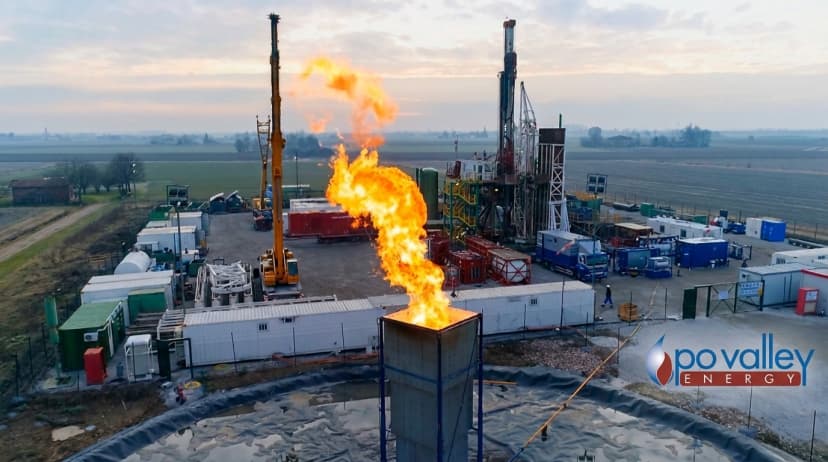
Po Valley Energy (ASX: PVE) Eyes Multi-Well Future With Fresh Hera Gas Deal
Po Valley Energy (ASX: PVE) signed a new 12-month gas supply deal with Hera Trading and cleared a key regulatory step for its Selva Malvezzi four-well drilling program, backed by record August gas revenue.

Buru Energy (ASX: BRU): A Multi-Year Downtrend Meets Renewed Hope on New Project Funding
Buru Energy (ASX: BRU) is a pre-production explorer advancing its Rafael Gas Project toward a mid-2027 investment decision. Shares remain near 52-week lows, but funding progress, reserves certification, bullish divergence and trendline breakout potential offer catalysts amid significant dilution and execution risks.
Investing in ASX Energy Stocks: A Complete Guide
Energy stocks mean shares in companies whose core business is producing, refining, transporting, or supplying energy. These firms fuel our world, not just literally but financially. In most classification systems (like GICS), the energy sector is divided into two broad industries: energy equipment and services and oil, gas, and consumable fuels.
For those considering investing in ASX energy stocks, it's a sector that offers a unique mix of traditional commodity exposure and high-growth clean energy opportunities.

Are Energy Stocks a Good Buy? (What Makes Investment Attractive?)
Here are drivers that make investing in energy stocks attractive:
1. Commodity Prices & Supply Dynamics
The lifeblood of most energy companies is the price of underlying commodities, such as oil, natural gas, coal, etc. When global demand outstrips supply, prices rise, boosting producers' profit margins. Conversely, oversupply or weak demand squeezes margins. In recent outlooks, analysts expect constrained global oil supply (fewer discoveries, limited spare capacity) and steady demand to support higher price ranges. Because energy producers often have high fixed costs, much of the upside in revenues (when prices rise) tends to flow to the bottom line. That leverage makes earnings in this sector exceptionally responsive to favourable supply/demand shifts.
2. Rising Global Energy Demand & Electrification
As economies grow, especially in emerging markets, energy demand continues to climb. Add to that trends like electrification of transport (EVs), increased datacenter activity, industrial energy usage, and rising baseload power requirements. This demand benefits companies across the energy value chain, including oil and gas companies, utilities, renewable developers, grid infrastructure, and energy storage providers. In effect, even if the mix shifts from fossil fuels to cleaner sources, the overall volume of energy consumed is still likely to rise.
3. Technological Innovation & Cost Reductions
Over time, drilling, extraction techniques, digitalisation, and renewable technology improvements reduce costs and boost efficiency. For instance, the cost of solar PV and wind installations has decreased dramatically, making them more competitive. Advancements in fossil energy, such as enhanced oil recovery, fracking techniques, and automation, help producers reduce break-even costs. As technologies mature, new entrants (especially in clean energy) can scale more rapidly, meaning winners in this space might achieve fast growth.
4. Policy, Regulation & Incentives
Governments worldwide are pushing energy transition policies, such as subsidies, tax credits, carbon pricing, renewable mandates, emissions rules, etc. These can dramatically shift the economics of energy investments. In the clean energy sector, subsidies or credits (e.g., for solar, wind, and battery storage) lower investor risk and improve returns. In the traditional sector, regulation (or deregulation) can either create headwinds (e.g., carbon taxes) or support (e.g., favourable permitting, energy security policies). Because energy is so central to national interests, it's often the subject of strategic support or restriction.
5. Dividend Yield & Free Cash Flow Potential
Many energy companies, especially large, established ones, offer relatively high dividend yields compared to other sectors. That makes them attractive for income-focused investors and those looking for value stocks. Also, when commodity prices are favourable, these firms generate strong free cash flows. That cash can be used to reinvest, pay down debt, or return capital to shareholders via buybacks or higher dividends. Stable or rising commodity prices can cushion against valuation setbacks.

An ASX Energy Companies List (Areas for Investment)
On the ASX, energy is a diverse playing field. Some of the more prominent sub-sectors include:
Oil & Gas Exploration & Production: (Search for, drill, and extract oil or natural gas)
Representative ASX stocks: Woodside Energy Ltd (ASX: WDS), Santos Ltd (ASX: STO), Beach Energy (ASX: BPT)
Integrated Energy / Utilities / Retailing: (Own generation + electricity/gas retail + transmission/retail operations)
Representative ASX stocks: Origin Energy (ASX: ORG), AGL Energy (ASX: AGL)
Coal & Other Fossil Fuels / Consumable Fuels: (Coal mining, supply of fuel, or fuel‐based power plants)
Representative ASX stocks: Yancoal Australia (ASX: YAL), Whitehaven Coal (ASX: WHC), New Hope (ASX: NHC)
Renewables & Clean Energy / Project Developers: (Solar, wind, hydro, battery storage, renewables infrastructure, hydrogen)
Representative ASX stocks: Infratil (ASX: IFT), Frontier Energy (ASX: FHE)
Supporting Technologies / Storage / Grid Infrastructure: (Battery makers, grid upgrades, energy storage, transmission tech)
Representative ASX stocks: e.g. battery tech companies (Altech Batteries (ATC) is a prominent player here), clean-energy techs (some smaller caps)
Which subsectors seem more promising?
Not all energy opportunities are equal. Based on current trends and risks, here’s how we’d weight the prospects:
Renewables / Clean Energy Developers & Storage: This is likely the highest growth zone. Governments and state authorities are pushing for decarbonisation, and Australia has strong solar and wind potential. Many investors searching for the best renewable energy stocks on the ASX look here. Small to mid-cap renewables names (like Frontier) offer upside if they execute the risks are project execution, capital intensity, regulatory changes, and grid constraints.
Integrated Utilities / Retail + Generation: These names strike a balance: they have stable cash flows from customer retail operations and some upside from transitioning their generation mix. For example, Origin Energy recently hit a multi-year high on positive expectations for its retail business. The downside is that legacy assets (coal/gas plants) face regulatory, environmental, and closure pressures.
Oil & Gas E&P: These remain important, especially as Australia is a significant LNG exporter. These oil and gas companies in Australia benefit if global gas/oil prices rise (because of supply constraints or geopolitical shocks). But they are more volatile, and the long term trend leans toward reduced fossil usage. Also, carbon policy risk is real.
Coal & Consumables: This is increasingly the riskiest bucket over a long horizon. While some coal producers still generate profits, the trend is downward due to climate policies, carbon cost, public pushback, and competition from cheaper alternatives. Unless you’re making a very short bet, caution is advised here.
Supporting Technologies / Grid & Storage: These are interesting “enablers.” As more renewables enter, grid upgrades, battery storage, smart inverters, and energy-tech counters will be in higher demand. These tend to be smaller, more volatile names. The upside is if one company captures a key niche (storage, grid stability, hydrogen infrastructure). The downside is that they often depend on scale, policy subsidies, or contracts with big utilities, so execution is critical. (Investors often gain exposure here via a broad ASX energy ETF).
How to Evaluate ASX Energy Stocks
Here are factors that you should consider to find the best-performing energy stocks on the ASX:
1. Reserves, Production & Resource Base
The size, quality, and cost of reserves are foundational in oil, gas, or mining-adjacent energy names. A company might look cheap on surface metrics, but if its reserves are nearly depleted or hard/expensive to extract, that’s a warning.
Proven & probable reserves: How much proven (and probabilistic) resources does the company control? This gives a floor to future output.
Decline curves & life of field: Existing fields naturally decline over time; companies must offset that via new drilling.
Cost per barrel/break-even price: Some reserves are cheap to extract, others are marginal. The lower the break-even point, the more buffer the company has when commodity prices drop.
Exploration upside or potential upside resources: If a company has good exploration acreage or potential discoveries, there is optionality.
2. Cash Flow & Free Cash Flow (FCF) Generation
A company may show “big revenue” but still struggle if its costs (capex, financing, maintenance) eat into it. Cash flow is everything.
Operating cash flow (OCF) is the amount of cash generated from normal operations.
Free cash flow = OCF minus maintenance capital expenditures; this is what remains to repay debt, fund expansion, or pay dividends.
Sustainability: Is the business model sustainable under varying commodity price scenarios? Look at FCF under “stress test” assumptions.
Capex discipline: If a company spends wildly on growth without generating proportionate returns, that’s risky.

3. Leverage & Financial Strength
Energy companies are capital-intensive. Drilling rigs, pipelines, maintenance, and infrastructure all require heavy investment. That means debt is often baked into their balance sheets. Too much debt, which can’t be serviced under stress, can sink a company when trouble arises.
Key metrics to check:
Debt-to-EBITDA (or debt-to-EBITDAX in exploration firms): How many years of earnings to cover the debt? A high ratio is a red flag.
Interest coverage ratio: EBIT (or adjusted earnings) divided by interest expense; this shows how comfortably the company can pay interest.
Debt-to-capital or debt-to-equity: To see how leveraged the firm is relative to its equity base.
Liquidity / short-term obligations: Check the current ratio and quick ratio and whether near-term debt maturities may cause refinancing risk (especially in rising interest rate environments).
Expert Note: At Proactive Equities, our analysis of energy stocks places extreme emphasis on Free Cash Flow (FCF) generation and Balance Sheet strength. A company that can't fund its operations and dividends from its own cash flow (OCF) or is dangerously leveraged (high Debt-to-EBITDA) is a major red flag for us, regardless of commodity price hype. This discipline is key to separating quality investments from gambles.
4. Valuation & Growth Outlook (Including Regulatory & Transition Risk)
Even a fundamentally solid energy stock can be a poor investment if you overpay. So valuation relative to future growth matters. In energy, you must also layer on regulatory risk, carbon transition, policy uncertainty, and the evolving energy mix.
Aspects to evaluate:
Valuation multiples: Look at EV/EBITDA, P/E (if positive earnings), price-to-book (for asset heavy firms). Compare against peer group and historical ranges.
Growth forecasts: Are earnings or cash flows expected to grow? What is the driver (new fields, efficiency gains, renewable segments)?
Transition & regulatory environment: Governments may impose carbon taxes, closure mandates, or renewables subsidies. A company with a clear transition plan (towards renewables, gas over coal, carbon mitigation) is less exposed to policy risk.
Comparables/peer benchmarks: Use comparable valuations (comps) to see whether stocks are cheap or expensive given risk/growth.
Optionality & flexibility: Does the company have flexibility to pivot (e.g. investing in renewables, switching production) if industry trends shift?
What are the Risks of Investing in Energy Stocks?
Here are five risks you must watch out for:
1. Commodity Price Volatility & Cycles
Perhaps the most obvious risk: energy companies live and die by the price of oil, gas, coal, or whatever fuel they deal in. These prices swing wildly based on global supply/demand, geopolitical events, OPEC decisions, technological shocks, global economic health, and more. A sudden oversupply (e.g. after new large-scale discoveries) or a drop in global demand (e.g. during a recession) can crash commodity prices, and with them, the revenues and margins of energy firms. Many energy businesses carry high fixed costs (infrastructure, drilling rigs, maintenance), so when prices drop, profitability gets squeezed fast. Because of that, even a company that looks strong in good times can struggle when cycles turn. Predicting the timing of these swings is extremely difficult, which means you might buy “at the top” unknowingly.
2. Regulatory, Policy & Transition Risk
The energy sector is under intense pressure from climate policies, carbon pricing, emissions constraints, and shifts toward renewables and cleaner forms of energy. Governments may impose stricter regulations, tax fossil fuel extraction, limit permits, or change subsidy and incentive schemes for clean energy. A company heavily reliant on carbon-intensive operations may face stranded assets (e.g. power plants that must be retired early), costly retrofits, or punitive taxes. Transitioning to cleaner energy often requires huge investment, and failure to adapt can devastate long-term prospects. Further, policy reversals or changes (e.g. change of government, rollback of subsidies) can suddenly upend expected economics for renewable projects or fossil operations. In short: political risk is real.
3. Capital Intensity, Debt & Financial Leverage
Energy projects, drilling wells, building pipelines, maintaining infrastructure, constructing renewables plants, are capital intensive. Many energy firms carry significant debt. If they can’t service that debt (because of low prices, cost overruns, or weaker cash flow), they risk default, restructuring, or dilution. Highly leveraged companies are more vulnerable when times turn. Their interest payments eat up cash, leaving less flexibility. If new capital becomes expensive or unavailable (especially in a higher interest rate environment), expansion or survival becomes harder. Another dimension: cost overruns, project delays, cost of financing escalation, all eat into returns and can break even formerly attractive projects.
4. Operational & Technical Risks
Energy projects are complex. There’s a risk of accidents, equipment failures, drilling dry wells, unexpected geological issues, supply chain problems, weather events, grid failures (for renewables), or technology underperformance. For example, a solar farm may produce less than projected because of shading, panel degradation, or lower-than-expected sunlight. A gas field may underperform because of reservoir problems or leaks. Infrastructure (pipelines, transmission lines) may suffer outages, maintenance challenges, or regulatory interruptions. Also, in renewable and clean energy fields, technological obsolescence is a concern. New breakthroughs (e.g. in batteries, hydrogen, novel solar tech) could render existing assets less competitive or obsolete.
5. Market, Liquidity & Equity Risk
Energy stocks (especially in smaller caps, renewables, or niche segments) can suffer from limited liquidity, few buyers or low trading volume. This can lead to high bid-ask spreads, difficulty exiting positions, and bigger price swings. Equity markets are also prone to sentiment swings. When energy is “out of favour,” capital can withdraw sharply, magnifying losses. During market crises or risk off periods, energy might suffer more than safer sectors. Moreover, reputational and ESG pressures (activist investors, public opinion, “greenwashing” scrutiny) can result in negative news, lawsuits, or brand damage that influences valuation.

Conclusion: Is Investing in ASX Energy Stocks a Good Idea Now?
Investing in ASX energy stocks remains a cornerstone of many portfolios, offering a mix of high-yield dividends from established players and high growth potential from the renewables transition. However, as this guide has shown, it is not without risk. Success in this sector requires more than just betting on oil prices; it demands a deep understanding of how to evaluate a company's financial health, its exposure to regulatory change, and its position in the long-term energy transition.
FAQs on Investing in Energy Stocks
1. Which stocks are referred to as Energy Stocks? Energy stocks are shares of companies involved in producing, refining, transporting, or supplying energy sources such as oil, gas, coal, or renewables like solar and wind.
2. What makes investment in Energy Stocks attractive? They can offer substantial returns through high commodity prices, rising global energy demand, technological innovation, supportive government policies, and steady dividend payouts.
3. What are some of the high-risk factors associated with investing in Energy Stocks? Major risks include commodity price volatility, regulatory and policy changes, high debt levels, operational failures, and market sentiment shifts affecting share prices.