

Healthcare
.webp&w=828&q=75)
Emyria (ASX: EMD): Sydney Clinic Opens as Treatment Network Expands
Emyria (ASX: EMD) has opened its first Sydney Empax clinic, expanding its treatment network to four Australian states. The new facility adds treatment capacity, while patient volumes and reimbursement arrangements remain key factors in its commercial development.

Cochlear (ASX: COH): Class Action Hits after 40% Crash, but Nexa Fuels Comeback Bid
Cochlear (ASX: COH) faces a shareholder class action over its FY26 profit forecast, just as its Nexa rollout, fully implantable trials and a November investor day shape the recovery story.

Healius (ASX: HLS): Sells Agilex Biolabs to Novotech for $160m to Sharpen Pathology Focus
Healius (ASX: HLS), founded in 1985, has agreed to sell Agilex Biolabs to Novotech for an enterprise value of $160 million, sharpening its focus on core pathology operations.
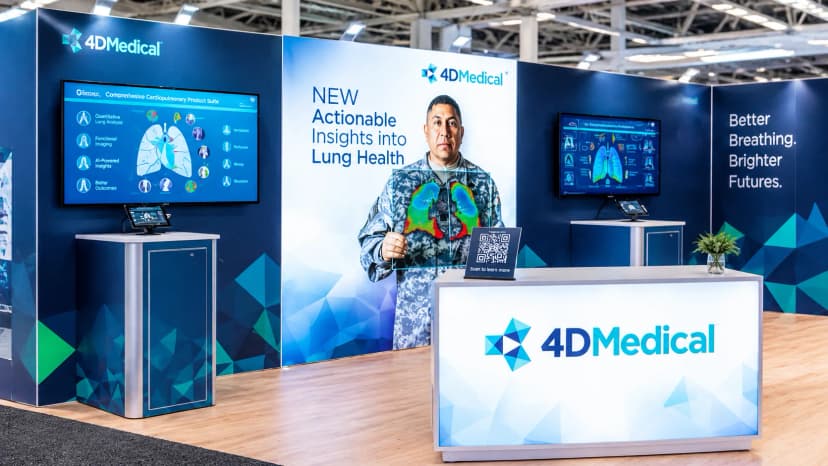
4DMedical (ASX: 4DX): Pricing the Future of Lung Imaging
4DMedical is scaling its lung-imaging software portfolio, led by CT:VQ, across hospitals and imaging networks. FY26 scan volumes rose 77% to 344,075, while cash reached A$278m; however, the company remains loss-making as it pursues commercial adoption and revenue growth.

Pro Medicus (ASX: PME): Scaling Global Leadership in Enterprise Imaging and AI‑Driven Diagnostics
Pro Medicus (ASX: PME) delivers record revenue growth, expanding margins, and accelerating AI‑driven innovation, reinforcing its global leadership in enterprise imaging and cloud‑based diagnostics.
.webp&w=828&q=75)
BlinkLab (ASX: BB1) Gains Momentum: AI Screening Platform Meets a High-Volume BB1 Breakout
BlinkLab (ASX: BB1) is advancing its autism and ADHD assessment technology through clinical studies, FDA validation work, and research partnerships. Recent technical strength reflects growing investor interest, though regulatory and commercial risks remain.
Investing in ASX Healthcare Stocks: A Guide to Equipment & Services
What are Healthcare Equipment & Services Stocks? Healthcare Equipment & Services stocks are companies whose business revolves around supplying medical tools and devices and delivering healthcare services, not drug development per se, but the physical and operational backbone of medicine.
The standard industry classifications (like GICS) separate this grouping from pharmaceuticals and biotechnology. On the “equipment & supplies” side, you’ll find firms that make everything from surgical instruments and disposable supplies to advanced imaging machines, implants, diagnostic scanners, and wearable monitors. On the “services” side, the players include hospitals, outpatient clinics, home health agencies, rehabilitation centres, diagnostic laboratories, and specialty service providers (like dialysis operators).
This sector blends two worlds: the capital-intensive world of medical technology innovation and the more stable, operational realm of health-care delivery. That mix gives the sector its particular risk/return profile for those investing in ASX healthcare stocks: innovation upside from equipment makers, and steady demand from service providers.

What makes investment in the Healthcare Equipment & Services Stocks attractive?
Investing in Healthcare Equipment and services stocks can be compelling, not just because health is essential but also because several structural, financial, and technological forces support sustained growth.
1. Demographic options & aging population
One of the most dependable foundations for this sector is the demographic shift. As populations in many countries age, demand for diagnostics, devices (e.g. joint replacements, imaging), chronic-care monitoring, and hospital services rises. In effect, more “patients per capita” leads to greater utilisation of equipment and services. This isn’t just hypothetical; health expenditures grow faster than GDP in many developed economies. Because these companies sell things people need (not things people can easily delay), they enjoy more resilient demand.
2. Technology innovation & product upgrades
Medical technology evolves rapidly. Devices and services get better, more precise, more efficient. A hospital replacing older imaging machines with newer ones, or integrating AI-augmented diagnostics, means recurring capital spending. Breakthroughs, miniature sensors, remote monitoring, robotics, and telehealth devices open fresh revenue streams. These upgrades, iterations, and replacement cycles provide a growth engine. Also, margins can expand as new premium products replace lower-margin ones.
3. Predictable cash flows & recurring revenue
Many equipment & service companies enjoy recurring or semi-predictable revenue. Consider contracts for maintenance, service, consumables (e.g. reagents, disposables, parts), follow-on services, and long lifecycle replacement cycles. For example, once a hospital installs a particular machine, it often signs long-term service or supply agreements. These “aftermarket” streams are more stable and less cyclical than initial equipment sales. That steadiness appeals to investors.
4. Defensive qualities & economic resilience
Because healthcare is essential, this sector often behaves as a “defensive” play. Demand for discretionary items might fall in more challenging economic times, but people still need medical care. Equipment & services tied to emergency care, diagnostics, routine monitoring, or essential surgeries often hold up better than consumer goods or luxury sectors. That said, elective procedures might suffer, but the core tends to be more stable.
5. Regulatory trends, reimbursement & consolidation
Health care is heavily regulated, so changes in policy, reimbursement rates, or insurance structures can shift the playing field. That’s a risk, but also an opportunity. Companies that adapt or partner with payers may benefit. Additionally, consolidation (mergers, acquisitions) is frequent: larger firms with scale can better negotiate with payers, reduce costs, and roll out innovations. Thus, companies with good positioning in consolidation, regulatory adaptation, or payer collaboration can outpace peers.
An ASX Healthcare Companies List (Equipment & Services)
Here’s a look at where investors might find opportunity within the ASX Healthcare Equipment & Services space.
1. MedTech / medical devices & diagnostics
This is one of the more visible and innovation-driven parts of the sector on the ASX. It includes companies developing devices, imaging tools, diagnostic machines, sterilisation or cleaning systems, implantables, etc.
Nanosonics (ASX: NAN) is a strong example. It produces automated disinfection systems for ultrasound probes (its “Trophon” line) to reduce healthcare-associated infections.
Cochlear (ASX: COH) manufactures advanced implants (cochlear implants, bone-anchored hearing devices) and is known globally.
Pro Medicus (ASX: PME) falls into the diagnostic / imaging software side, which includes radiology imaging, picture archiving, communications systems (PACS), etc. It has been cited as a leading performer. Because medtech often leans on innovation, intellectual property, and global export potential, it’s one of the more “high upside / high risk” subsectors.
2. Health services, diagnostics/pathology/contracts & support services
It covers companies that run laboratories, diagnostic service providers, outpatient centres, or supply support infrastructure.
Sonic Healthcare (ASX: SHL) is a significant name in diagnostics/pathology services listed in the ASX health sector index.
Healius (ASX: HLS) also operates in pathology, imaging, and healthcare services.
Sigma Healthcare (ASX: SIG), while more involved in pharmaceutical distribution and healthcare supply chains, is listed among healthcare companies (though it's a bit adjacent to pure equipment/services). Health services tend to produce more stable, steady cash flows (especially pathology and chronic diagnostics) compared to medtech, which is more volatile.
3. AI Healthcare Stocks Australia (Digital Health & Software)
This is less mature in Australia but is gaining traction. Companies that combine software, telemedicine, remote monitoring, health data analytics, digital diagnostics, and connected devices are found here.
Alcidion (ASX: ALC) is often cited in “digital prescription” or health IT contexts. Small ASX medtechs combine hardware and software to promote precision, safety, and workflow efficiency. Because this is a growing frontier, the digital health segment may offer an asymmetric upside (if adoption accelerates), but it has a higher risk.
(Note: For investors seeking broad exposure, an ASX healthcare ETF can track the performance of the entire sector, including equipment, services, and biotechnology healthcare products.)
Which areas offer better opportunities? If you prefer a balance between growth and risk, medtech (devices/diagnostics) and health services are more mature bets. However, for higher risk / higher reward, digital health is a segment to watch closely, mainly as healthcare systems invest more in tech integration.

How to Find Top-Performing Healthcare Stocks on the ASX
You need a framework when you aim to pick top performing Healthcare Equipment & Services stocks on the ASX. Below are essential factors you should consider:
1. Competitive advantage / “moat” and intellectual property
Durable advantages matter in medtech, diagnostics, or equipment: patents, regulatory approvals, proprietary designs, and strong clinical validation. A company with a unique technology or a patent portfolio is more complicated to displace. For example, in global health stocks, analysts often compare “moat ratings” (wide vs narrow) to judge whether a business can sustain profits over many years. If a company’s product can be easily copied or regulations can force a design change, its margins may shrink. In contrast, a firm with patents, exclusive licensing deals, or regulatory “first mover” status is better positioned to fend off competition. That gives it optionality: to expand, defend pricing, and invest in further innovation.
2. Revenue diversification & recurring/aftermarket streams
A significant risk in healthcare equipment is that sales are lumpy: a hospital might buy a machine in one year, then nothing for years. That leads to volatile earnings. The more stable stocks have after-sales service/consumables streams (maintenance contracts, replacement parts, reagents, software licenses) and diversified customer bases (multi-region, multiple product lines). If a company’s revenue heavily depends on one product or region, a disruption or a regulation change there can badly hurt results. But if 30–50 % of its revenues come from recurring service contracts, it gives a base to absorb volatility.
3. Regulatory pathway, approvals & reimbursement risk
Unlike many ordinary industries, healthcare companies operate under heavy regulation. For medtech or diagnostic firms, obtaining regulatory approvals (TGA in Australia, FDA in the U.S., CE in Europe) is a significant hurdle. A delay or failure can derail growth. Equally important is reimbursement: even if a device is approved, it needs to be covered by insurers or the health system; otherwise, hospitals may not adopt it.
Expert Note: At Proactive Equities, our analyst team places extreme weight on two factors in this sector: the regulatory pathway and recurring revenue. A company with a brilliant device that is stuck in TGA/FDA approval is a speculative liability. We filter for companies that have a clear, de-risked regulatory path and a strong recurring revenue model (like Nanosonics' consumables). This demonstrates a proven, sustainable business, not just a promising idea.
4. Financial strength, cash runway & capital discipline
Because developing medical devices or service infrastructure is capital-intensive, and adoption can be slow, companies often burn cash before turning profitable. A top stock must have sufficient balance sheet strength, manageable debt, and prudent capital allocation (R&D, marketing, geographic expansion).

What are the Risks of Investing in Healthcare Stocks?
Investing in Healthcare Equipment & Services stocks can be rewarding, but far from without danger. Here are five risks you should be acutely aware of:
1. Regulatory, approval & reimbursement risk
One of the most enormous overhangs in this sector comes from regulation. Medical devices, diagnostic tools, and health services must often pass stringent regulatory hurdles (for example, in Australia via the TGA, in the U.S. via the FDA, or in Europe via CE / MDR). A delay or failure to gain approval can derail a product’s timeline or render it unsellable. Even after approval, reimbursement is another gauntlet: a device or service may never get accepted by insurers or public health systems, limiting uptake. Changes in government healthcare policy, shifting reimbursement rules, or price cuts can also force margins down. A regulatory or reimbursement setback can be catastrophic for a company whose growth plan rests on the rollout of a new device.
2. Obsolescence, competition & technology risk
The medical-tech field is intensely competitive and rapidly evolving. A cutting-edge technology can become redundant tomorrow with an innovation, an algorithm, or a cheaper alternative. If a company fails to invest effectively in R&D, or if a competitor introduces a disruptive solution (e.g. AI-based diagnosis, miniaturised sensors, or alternative imaging modalities), its existing product lines may lose market share. Also, patent expirations or weak intellectual property protection may expose the company to copycat products. In short, your investment bet can be overtaken by a better mousetrap.
3. Commercial / adoption/sales ramp risk
Even if the regulatory and technical challenges are cleared, converting that into commercial success is not guaranteed. Hospitals, clinics, and healthcare providers are often conservative in adopting new tools; budget constraints, long procurement cycles, clinician inertia, and required training can slow adoption. The “sales ramp” (from first customers to broad uptake) can take years, and forecasts may overestimate speed. If a company misjudges market readiness or the sales cycle, revenue can lag, cash burn may grow, and investor expectations may be disappointed.
4. Financial strain, capital burn & dilution risk
Developing medical devices, scaling manufacturing, marketing globally, handling certifications, and installing service networks are capital-intensive. Before the product gains strong traction, the company may burn cash heavily. If it lacks sufficient reserves or external capital, it might have to raise additional funds, often by issuing new shares (dilution risk), taking debt, or cutting back on growth investments. Investors who hold early may find themselves diluted or shaken out. Poor capital discipline or overly ambitious expansion can magnify this risk.
5. Macroeconomic, reimbursement pressure & policy risk
No company operates in isolation. Broader forces, interest rates, healthcare budget constraints, austerity measures, inflation, and rand recessions can constrict demand. Governments may seek to reduce health spending, tighten reimbursement rates, or impose pricing pressures on medical technologies. For example, during economic downturns, hospitals may delay capital purchases, reduce elective procedures, or renegotiate contracts, which squeezes device and services companies. Also, trade policies (tariffs, import/export controls) and changes in healthcare regulation can introduce additional uncertainty. These macro and policy risks can significantly amplify company-level challenges.
Conclusion: Should You Be Investing in ASX Healthcare Stocks?
Investing in ASX healthcare stocks, particularly in the equipment and services sector, offers a compelling mix of defensive demand (from aging populations) and high growth innovation (from medtech). As this guide has shown, the healthcare industry trends in Australia point toward continued growth. However, the risks of investing in healthcare stocks are unique, dominated by complex regulatory hurdles and the constant threat of technological obsolescence. Success in this sector requires a sharp focus on companies with strong intellectual property, recurring revenue streams, and a clear path to regulatory approval.
FAQs on Investing in Healthcare Equipment & Services Stocks
Which stocks are referred to as Healthcare Equipment & Services Stocks? They include companies that manufacture medical devices and diagnostic equipment, and those that provide healthcare services, such as hospitals, laboratories, and home-care operators.
What makes investment in the Healthcare Equipment & Services Stocks attractive? These stocks benefit from aging populations, technological innovation, steady demand for essential care, and recurring revenue from service contracts, creating growth and stability over time.
What high-risk factors are associated with investing in the Healthcare Equipment & Services Stocks? Key risks include regulatory hurdles, technology obsolescence, slow product adoption, high capital requirements, and potential policy or reimbursement changes that could affect profitability.