

Industrials

Veris (ASX: VRS): Can Margin Expansion Unlock Hidden Earnings?
Veris (ASX: VRS) is shifting from commoditised surveying toward higher-margin digital, spatial and advisory services, with Digital & Spatial revenue now 28% of group sales. Margins remain thin, but strong free cash flow, net cash, and a growing pipeline support cautious optimism.

DroneShield (ASX: DRO): Strong Growth, but Can Earnings Catch Up?
DroneShield (ASX: DRO) delivered record 1H26 revenue of $125.8M (+74%) and growing recurring software revenue, but margins fell to 60%, costs surged, and a $32.2M statutory loss raises questions on whether earnings can catch up to justify its share price.
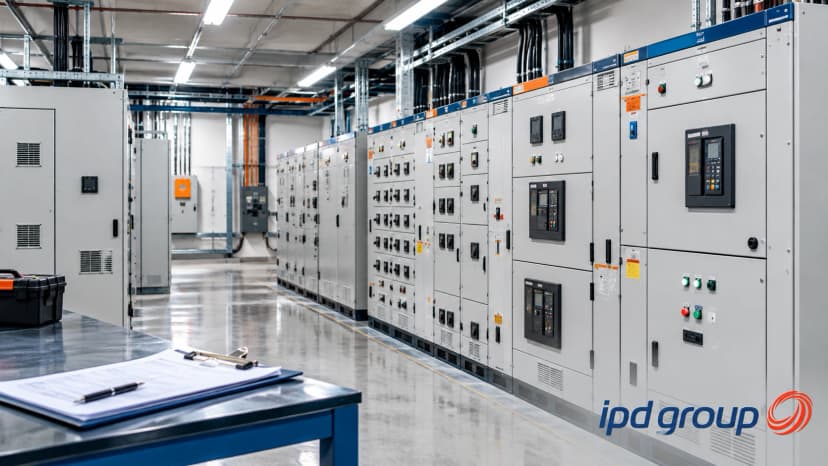
IPD Group (ASX: IPG): Data Centre Demand Builds as Shares React Off Support
IPD Group (ASX: IPG) posted record FY26 results, with data centre revenue up 27% amid Australia's AI infrastructure boom. Shares reacted well off support and now approach key resistance near $6.00.

Why KTEK Aerosystems (ASX:KTK) 's $200k Defence Deal Is a Huge Opportunity
KTEK Aerosystems (ASX: KTK) secured its first order from a major Israeli defence prime, a modest US$200,000 milestone within a US$994,100 work package. The real opportunity is a potential US$5 million pipeline, contingent on clearing upcoming engineering reviews and further customer orders.

AML3D (ASX: AL3): Submarine Parts Order Lifts Shares Toward a Key Chart Level
AML3D (ASX: AL3) shares jumped after securing a first US Navy submarine parts order from Austal USA, building on record FY26 revenue. Trading above key support, the stock now tests a technical trigger level, with a confirmed breakout above $0.165 needed to signal further upside.
.webp&w=828&q=75)
Titomic (ASX: TTT): US Air Force Contract Win Follows $16.5 Million Capital Raise
Titomic (ASX: TTT) shares rallied after a US$5 million Air Force contract, following a $16.5 million placement. The advanced manufacturer, still loss-making, is progressing a US redomiciliation while shares test key support with a potential trendline breakout ahead.
Investing in ASX Industrials Stocks: A Complete Guide
What are Industrial Stocks? Industrial stocks are shares in companies that make the machinery, infrastructure, and services other businesses need to build, transport, and support goods and services. Rather than producing things consumers buy directly (like phones or clothing), industrial companies supply the heavy-lifting behind the economy, such as factories, construction, logistics, aerospace, defence, etc.
This sector is often cyclical: it grows when the economy expands (businesses invest, build, ship more) and contracts during downturns. Industrial stocks are fundamental; they’re like the bones and connective tissue of the broader economy. When they’re healthy, it often means business confidence is up. For those investing in ASX Industrials stocks, this sector offers a direct link to the physical economy.

What makes investment in the Industrial Stocks attractive?
There are several main factors that make investment in industrial stocks attractive now and potentially in the future. These factors make industrial stocks appealing because they combine near term catalysts (infrastructure spending, reshoring) with longer-term structural trends (automation, green transition).
Of course, with opportunity comes risk: Industrials are cyclical and sensitive to interest rates (cap-ex gets expensive when borrowing costs are high), input cost inflation, and geopolitical risk (e.g., tariffs). However, many analysts believe that, given current policy priorities and technological trends, industrials have a strong chance to perform well in the coming years.
1. Infrastructure & Construction Spending
When governments invest in infrastructure, roads, bridges, power grid upgrades, public transit, and airports, they require heavy machinery, raw materials, engineering services, and transportation. All of those are core industrial subsectors. Many countries (huge economies like the U.S., EU, and China) have committed huge sums to infrastructure through stimulus bills or green transition packages. For example, in the U.S., the Infrastructure Investment & Jobs Act plus the Inflation Reduction Act aim to stimulate massive investment in roads, clean energy, and grids. Those contracts often last years, creating long-term demand for industrial goods (machinery, cement, steel, etc.). This supports revenue visibility and investment in capacity
2. Reshoring, Nearshoring & Supply Chain Reconfiguration
In recent years, firms have experienced disruptions (pandemics, shipping delays, geopolitical risk) that have made global supply chains less reliable. Many move production parts closer to end-markets (reshoring) or nearby countries (nearshoring). It means new factories, logistics, and industrial infrastructure closer to home, which boosts demand for equipment, transport, and industrial services.
3. Technological Innovation & Automation (Industry 4.0, AI, Digitalisation)
Technology is transforming the industrial sector: robotics, AI, sensors, IoT, predictive maintenance, and more efficient manufacturing. Automation improves productivity (you do more with less), cuts costs, and reduces waste. Companies adopting newer tech may gain a competitive advantage. Also, demand increases for the products and services that enable this transformation (robots, control systems, software). Further, AI and data centres need substantial “industrial backbone” infrastructure, power management, cooling, facility engineering, etc. This spillover effect helps industrial firms
4. Geopolitical & Defence-Related Demand
Tensions between countries, concerns about national security, and rising defence budgets all increase spending in aerospace and defence, security, and related industrial sectors. Australian defence companies on the ASX are part of this trend. Governments raise defence spending as global tensions grow (e.g., over borders, trade, and strategic resource control). Older fleets need maintenance; newer systems and military/aircraft / naval hardware upgrades create demand.
5. Macro Trends: Population Growth, Urbanisation & Green Transition
These are slower-moving but powerful supports. As the global population increases, more people live in cities, requiring more infrastructure, transport, buildings, and energy. At the same time, the push to decarbonise (green energy, stricter environmental rules) forces investment in clean technologies, renewable energy infrastructures, and more efficient equipment.
Population & Urbanisation: New housing, water systems, electricity, and transportation infrastructure require industrial output, especially in emerging markets.
Green / regulation/energy efficiency: Rules on emissions, efficiency, and clean power require upgrading equipment, renewable power plants, and the grid. Industrial companies that provide these goods/services benefit.

Industrials Sector ASX List (Areas for Investment)
Here’s a breakdown of key industrial sub-sectors on the ASX, some of the big names in each, and which areas might offer stronger opportunities going forward.
1. Transportation / Freight & Logistics
Aurizon Holdings (AZJ): Operates rail freight for coal, bulk, and general freight. It is very much focused on moving raw materials and commodities.
Qube Holdings (QUB): A large player in ports and bulk logistics, import/export services, and associated infrastructure.
Transurban Group (TCL): Although it has more infrastructure/toll roads than pure freight, it’s often grouped in industrials because of its exposure to transport/infrastructure.
2. Engineering / Construction / Infrastructure Services
Downer Group (DOW): Provides engineering, construction, and maintenance services for infrastructure, transport, utilities, etc. It is very diversified in the built environment.
Worley Limited: Engineering & professional services, especially in the energy, resources, and process industries.
3. Commercial & Professional Services, Equipment & Machinery
McMillan Shakespeare (MMS): Operates in asset leasing/fleet management, novated leasing, etc.
Other smaller machinery / industrial equipment providers are also present (see StockLight / industrial stock listings).
4. Infrastructure / Toll Roads / Asset-backed Transport Infrastructure
Atlas Arteria (ALX): Owns/operates toll roads and gets stable income streams often linked to inflation/traffic volumes.
Transurban (TCL) again fits here.
5. Waste Management / Environmental Services
Cleanaway Waste Management Ltd (CWY): Provides waste and recycling services; these businesses tend to benefit from regulation and environmental policy.
Which Areas Might Offer Better Return Relative to Risk If we were to pick where the best risk-adjusted opportunities lie now, we’d lean toward:
Freight & Logistics / Ports: Because of strong secular tailwinds (trade, supply-chain reorganisation), plus scalable infrastructure businesses.
Infrastructure / Toll Roads: These are for their more defensive cash flows and inflation linkage as governments continue investing.
Engineering & Energy-Adjacent Services: These are players that have diversified into renewable energy, grid upgrades, and process industries. These tend to capture both infrastructure spending and the green transition.
How to Find Top-Performing Industrial Stocks on the ASX
When picking top-performing industrial stocks on the ASX, it's not enough to see which ones have done well recently. You need to analyse a mix of financials, business strength, and external conditions. Here are essential factors that help distinguish promising industrial stocks:
1. Earnings Growth & Profitability
What to look for:
Stable and growing earnings (net income, EBIT, EBITDA) over multiple years. Industrial companies often have significant fixed costs; consistent growth indicates they manage costs, demand, and execution well.
Margins: Especially gross margin, operating margin, and net margin. Higher margins mean more room to absorb cost shocks (input costs, labour transport) without profitability collapsing.
Return on equity (ROE) / return on capital employed (ROCE): These show how effectively management turns shareholder or invested capital into profits. Industrials tend to be cyclical. When demand falls, margins suffer. However, companies with strong track records of growing earnings and maintaining good margins are more likely to survive downturns and bounce back strongly. Moreover, earnings growth often drives stock returns over the long term (dividends + reinvestment).
2. Valuation & Relative Pricing
What to look for:
P/E ratio (price divided by earnings): Trailing and forward P/E are proper. If the forward P/E is much higher than the trailing, it signals either expected strong growth or possibly overvaluation.
Price to Book (P/B) is useful, especially when tangible assets (machinery, plant, property) are significant. If P/B is low, the market might undervalue those assets.
EV/EBITDA or EV/EBIT (Enterprise Value to EBITDA/EBIT): helps compare companies with different capital structures, since EV includes debt.
PEG ratio (Price/Earnings to Growth): This ratio adjusts for growth; a stock with a relatively high growth outlook might still be reasonably priced even if its P/E looks high. Even a great industrial business can underperform if you overpay. Valuation metrics help you decide whether the current price reflects future earnings and risks. Relative valuation (comparing similar companies) helps spot under- or over-priced stocks.

3. Balance Sheet Strength / Financial Health & Capital Expenditure
What to look for:
Debt levels and leverage include the debt/equity ratio and interest coverage (how many times profits cover interest payments). Industrial firms often need to invest heavily in fixed assets; too much debt increases risk, especially when rates rise.
Free Cash Flow (FCF): after capital expenditures (capex). A company might report big profits, but if most of its cash is tied up in replacing machinery or meeting regulatory requirements, the real cash return to shareholders is less.
Asset base: the condition of equipment and the investment needed for maintenance or upgrades. Some industrials require frequent capex for safety, regulation, and efficiency.
Working capital management: How well does the company manage inventories, receivables, and payables? Large delays or inventory buildup can tie up cash and reduce returns. Industrial companies are capital intensive. Poor balance sheets can lead to trouble when demand falls or costs rise (e.g., interest, materials). Strong cash flow gives flexibility to invest in growth, weather downturns, and pay dividends.
Expert Note: At Proactive Equities, our analyst team places a heavy emphasis on Balance Sheet Strength and Free Cash Flow (FCF) when evaluating the industrials sector. Industrials are capital-intensive by nature. We look for companies that generate enough FCF to fund their own capital expenditures (capex) and reward shareholders, rather than relying on debt. This financial discipline is a key filter in our analysis for separating high-quality operators from cyclically-vulnerable ones.
4. Industry Trends and Risk Landscape
What to look for:
Regulatory environment: incentives, environmental rules, or mandates (e.g. emissions, renewable energy, waste management, safety) can drive demand (or costs).
Infrastructure spending, both government and private, is a big driver for industrials in Australia. Major public programs, stimulus programs, or transport/logistics investments are also big drivers.
Commodity/input cost exposure: Many industrial firms depend on steel, energy, oil, gas, and chemicals. Volatility in those inputs can squeeze margins. Also, any exposure to foreign currency risk (if importing equipment or exporting).
Cyclical sensitivity and demand outlook: Industrials often track the broader economy, construction, and manufacturing demand. If property, infrastructure, and export demand are weak, industrials may suffer. Also, trade policies and supply chain risks may affect industrials. Even if everything financial looks good, external factors can change the picture rapidly. Favourable boosts (say, a government boosting renewable energy spending) can turbocharge specific industrial sub-sectors. Conversely, rising input costs, tariffs, or downturns can hit even strong companies hard.
What are the Risks of Investing in Industrial Stocks?
Here are risks that are especially relevant when investing in industrial stocks:
1. Cyclicality & Economic Downturns
Industrial companies tend to be highly sensitive to the overall economy. When GDP growth slows, business investment drops, construction projects are delayed or cancelled, transportation demand weakens, commodity prices fall, etc., these directly reduce orders, revenue, and profitability in industrial businesses. Even companies with solid management, good products, and efficient operations can suffer during economic downturns simply because demand falls. Cash flows shrink, fixed costs (maintenance, debt, wages) remain, and profit margins fall or disappear. For example, many industrials struggle during recessions or periods of weak business investment.
2. Commodity & Input-Cost Volatility
Industrial companies only heavily rely on raw materials, energy, metals, fuels, and chemicals. Prices of those inputs can swing wildly due to supply disruptions, geopolitical tensions, changes in demand, weather, regulation, etc. When input costs rise quickly (steel, copper, oil, etc.), industrials often cannot pass all those costs on immediately (if at all), squeezing margins. Cost overruns or input shortages hit the bottom line. Rising costs can cause earnings to drop or turn negative even when revenues remain stable. In tight commodity markets, shortages or supply lag can lead to delays, which hurt service/revenue.
3. Capital Intensity / High Fixed Costs & Debt
Many industrial firms need significant capital investments: factories, machinery, R&D, and infrastructure. Those require upfront spending (capex), often financed via debt. It means high fixed costs (maintenance, depreciation, interest payments) that must be paid regardless of whether demand or revenue is substantial. If demand falls or revenues drop (see cyclicality), these fixed obligations weigh heavily. High leverage (debt) magnifies the problem; interest payments are still due even if earnings shrink. Also, heavy capex means free cash flow might be weak, making it harder to pay dividends, reinvest, or buffer against shocks.
4. Regulatory, Environmental & Political Risks
Industrial companies frequently operate in heavily regulated sectors, such as emissions, safety, environmental approvals, zoning, labour laws, trade tariffs, local content requirements, etc. Changes in government policy (e.g., environmental regulation, carbon pricing, labour rules) or political instability can impose costs, delays, penalties, or restrict operations. Regulation can shift quickly. What’s legal today may require expensive upgrades tomorrow, and what is preferential treatment (subsidies, tax breaks) may be removed. Environmental compliance (e.g., emissions, waste disposal) can require large investments. Permits and approvals can be delayed, which holds up projects. Political risk (tariffs, trade policy, expropriation in some countries) can disrupt supply chains or markets.

5. Supply Chain Disruption & Operational Risks
Industrial companies depend on complex supply chains, raw materials, parts, transport, skilled labour, energy, etc. Disruptions (due to natural disasters, pandemics, geopolitical events, logistical failures) can delay or block access to inputs or limit the ability to deliver products. Operational risks include equipment breakdowns, labour disputes, accidents, or technology failures (including cybersecurity). When components aren’t delivered, production halts, costs increase, and revenue is reduced or delayed. Delays can also lead to penalties if contracts stipulate delivery schedules. Unexpected breakdowns or accidents can require costly repairs, insurance, or replacements. Labour issues (skilled staff shortages, strikes) can reduce productivity or force shutdowns. Also, cybersecurity risk is growing. Production systems are increasingly digital/connected, so hacks or IT failures can halt operations or leak sensitive data.
Conclusion: Should You Be Investing in ASX Industrials Stocks?
Investing in ASX Industrials stocks offers a robust way to gain exposure to the core of the economy. From infrastructure spending and supply chain reshoring to the green transition, the drivers for this sector are strong and structural. However, as this guide has shown, these companies are cyclical and highly sensitive to economic downturns, input costs, and debt levels. Success requires a sharp focus on companies with strong balance sheets, sustainable free cash flow, and a clear competitive advantage in their niche.
FAQs on Investing in Industrial Stocks
Which stocks are referred to as Industrial Stocks? Industrial stocks are shares of companies in sectors that support economic infrastructure, such as transportation, construction, engineering, aerospace, defense, and logistics.
What makes investment in the Industrial Stocks attractive? They benefit from infrastructure spending, supply chain shifts, automation, defence demand, and long-term trends like urbanisation and the green transition.
What are some high-risk factors associated with investing in the Industrial Stocks? Key risks include economic cyclicality, volatile input costs, high capital intensity and debt, regulatory changes, and supply chain disruptions.