

Retail
.webp&w=828&q=75)
Bapcor (ASX: BAP)'s Double Signal: Turnaround Gains Traction Meets a Multi-Month Breakout
Bapcor’s FY26 turnaround shows improving sales momentum, lower debt, tighter pricing controls and stronger stock availability, though weak earnings, execution risks and cost pressures mean the recovery still needs further proof.
.webp&w=828&q=75)
Carma’s (ASX: CMA) Sales Are Surging, but the Chart Still Screams Trouble
Carma’s sales growth is accelerating, but its share price remains under pressure. Strong deliveries and expanding operations stand in contrast to weak momentum, cash burn concerns, and a bearish chart setup, unless CMA breaks resistance with strong volume

Elders (ASX: ELD) Shares Just Crashed More Than 20% as Guidance Cuts Shock Investors
Elders' shares fell over 20% after investors focused on weaker FY26 guidance, rising input and fuel costs, integration risks, despite strong half-year earnings growth driven by better conditions and Delta Agribusiness contributions, highlighting concerns about future margins and outlook uncertainty.
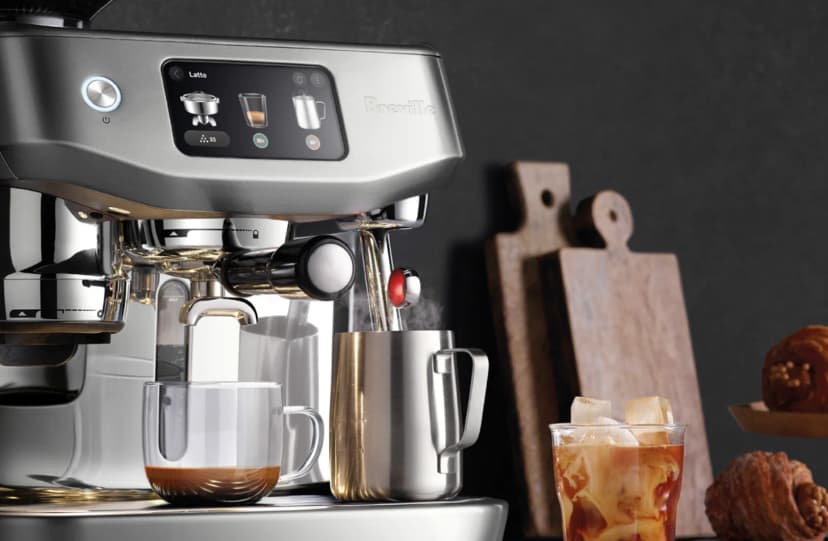
Breville Group (ASX: BRG): Premium Coffee Growth, Global Expansion & AI-Driven Efficiency
Breville is a premium global small‑appliances brand leveraging coffee leadership, innovation and an asset‑light model to drive ~10% growth. Strong cash flow, balance sheet improvement and a growing Beanz ecosystem support a justified valuation premium despite tariff pressure.

How Much Higher Can CETTIRE's (ASX: CTT) Share Price Go After the Recent Breakout?
Cettire (ASX: CTT) share price recently had a breakout. But it is in a bit of limbo; enough promise remains that a rebound could be on the cards, but enough uncertainty that it’s far from a safe bet. On one hand, the company is forecast to post healthy earnings-per-share growth over the next few years and has a pretty low price-to-sales ratio compared with peers, suggesting some latent value. On the other hand, consensus analyst targets hover modestly, some even see a drop, and many believe any upside beyond roughly one Australian dollar a share depends on improvements that aren’t guaranteed.
Investing in ASX Retail Stocks: A Complete Guide
What are Retail Stocks? Retail stocks refer to publicly traded companies whose core business is selling consumer goods directly to end-users. These firms own the stores (physical, online, or both) where you shop. It breaks down into several subsectors, each with distinct dynamics, risk profiles, and growth levers.
As a major part of the broader consumer discretionary sector, some retail stocks are countercyclical (e.g., grocery retailers often hold up better during downturns), while others, like discretionary goods, are highly sensitive to consumer confidence. For anyone investing in ASX retail stocks, understanding this cycle is critical.

What makes investment in the Retail Stocks attractive?
Here are factors that make investing in retail stocks attractive:
1. Consumer spending / economic growth tailwinds
Retailers depend heavily on consumers' disposable income. When the economy grows (wages rise, unemployment is low), people tend to spend more on essentials and discretionary items. Retail revenues often rise faster in that scenario, lifting margins, and boosting investor returns. Conversely, retailers (especially in discretionary segments) can suffer during recessions. Going forward, modest economic expansion and easing inflation could strengthen consumer purchasing power, especially in developed markets. But this factor is cyclical. Retail stocks can be hit quickly if consumer confidence drops or interest rates rise sharply.
2. Digital transformation & omnichannel execution
One of the most powerful drivers in retail over the past decade is the shift toward e-commerce, mobile shopping, and integrating offline and online (“omnichannel”) experiences. Retailers who do this well can reach more customers, reduce friction, and lower sales costs. In fact, surveys show many retail leaders believe AI, personalisation, and seamless channel integration are among their top growth levers.
Data analytics and AI also help with more precise inventory forecasting, demand prediction, dynamic pricing, and personalisation, all boosting margins. In the future, as technology advances (better logistics, better customer tracking, augmented reality in stores, voice commerce, etc.), retailers who are digitally savvy should have a structural advantage.
3. Scale, cost leverage & operational efficiency
Large retailers or those who can scale rapidly often benefit from economies of scale: buying power, logistics, marketing, and supply chain efficiencies. As their volumes grow, fixed costs (warehousing, IT, overhead) are spread over more units, improving margins. Retail firms that continuously optimise operations (automated warehouses, more intelligent distribution networks, predictive inventory) can also reduce shrinkage, waste, and overstock.
4. Brand strength, customer loyalty & network effects
Strong brands and loyalty programs create a moat. Customers tend to stick with retailers they trust, know, and where they have points or perks. That gives those retailers pricing power and margin resilience during more challenging times. Also, once a retailer has a large customer base, data from buying behaviour can help refine strategy, cross-sell, personalise offers, and lock in repeat business. Over time, this can build network effects: better data, better offers, more customers and better data again. Going forward, in a retail space, differentiators like brand reputation, exclusive products, or superior customer experience will matter more in sustaining long-term performance.
5. Market structure trends, consolidation & international expansion
Retail is fragmented, especially in many regions. That leaves room for consolidation (mergers & acquisitions) where stronger players acquire weaker ones, creating scale and synergies. Such consolidation can drive rotation of capital, margin improvements, and faster growth. Similarly, regional players expanding into new geographies (or via cross-border e-commerce) can tap growth in emerging markets. As consumption in many developing markets rises, “global retail winners” can ride that wave.
An ASX Retail Stocks List (By Sub-sector)
Looking at retail in Australia, you’ll see several niches / sub-sectors with distinct dynamics. Below are a few:
Consumer electronics/appliances / white goods:
Prominent ASX Stocks: JB Hi-Fi operates a large footprint in electronics and appliances.
Home goods/furniture/homeware/decor:
Prominent ASX Stocks: Temple & Webster (online homewares/furniture) is a leading name.
Department / general merchandise / big retail setups:
Prominent ASX Stocks: Harvey Norman (electronics, furniture, home products).
Specialty/fashion/apparel / branded retail:
Prominent ASX Stocks: Universal Store Holdings (fashion, youth brands) is a known name. Also, Cettire (luxury / online fashion) is listed as ASX: CTT.
Automotive/parts/leisure retail:
Prominent ASX Stocks: Super Retail Group (auto parts, camping, sports gear) is recognised.
(Note: For investors seeking broad exposure, an ASX Retail ETF can track the performance of the entire sector without requiring individual stock selection.)

Which areas are more profitable?
Here are some observations:
Home goods/furnishings / online homewares: This is a space benefiting from two strong features: More time spent at home (post-pandemic habits, remote work) encourages upgrades, decor spending, and furniture refreshes. The shift to digital is more natural for home goods (you can browse visuals, AR tools, etc.). Temple & Webster is well placed in this niche. This area can scale if they manage logistics, delivery, and margin control well. Because consumers tend to stick with brands they trust for higher-ticket home goods, there is room for loyalty and repeat purchases.
Fashion/specialty & online/hybrid models: Here’s where disruption and risk are highest. Companies that master online presence, branding, fast fashion, customer data, and supply agility may outperform. Universal Store has shown traction in youth fashion. Cettire is an intriguing play in online luxury fashion, reaching global audiences beyond Australia. This is a double-edged sword: there is high upside if they hit trends, but they are vulnerable when tastes change or consumer sentiment weakens.
Electronics/consumer durables: JB Hi-Fi is a stable name in that category. Demand for gadgets and upgrades (phones, TVs, smart devices) is relatively steady. Margins can be squeezed, but strong brands can negotiate better terms, bundle services, or push add-ons (warranty, installation, etc.). This sector is comparatively less volatile than fashion (though still sensitive to consumer cycles), as some electronics are seen as “essentials” or tied to technology refresh cycles.
Outdoor goods, auto parts, leisure/specialty retail: Super Retail Group operates in this domain (auto parts, camping, sports gear). Demand here can be cyclical, but there’s a “hobbyist/enthusiast” component that is stickier. If someone is into fishing, camping, or vehicles, they might continue spending even in soft cycles. This area also benefits from diversification across subcategories (if one location is slow, another might compensate).
Legacy department / big-box/general merchandise: Companies like Harvey Norman operate across many categories. Their strength is breadth and brand presence. However, they also carry heavy fixed costs (store networks, staffing, leases). Their risk is higher if foot traffic and in-store sales decline. There is an upside if such a company can successfully pivot more toward online, optimise inventory, and reconfigure store footprints. But the challenge is high.
How to Find Top-Performing Retail Stocks on the ASX
Here are factors that help you separate the good from the weak and improve your odds of success:
1. Same-Store Sales Growth & Comparable Store Metrics
Same-store sales (or “like-for-like” sales) measure how established stores perform, excluding new or closed outlets, compared to a prior period. It isolates organic growth from expansion effects. It shows whether the retailer’s existing footprint is improving, i.e., are customers returning, buying more, or spending more per visit? If stores that opened long ago are shrinking, that signals underlying deterioration.
2. Inventory Efficiency & Turnover (e.g. GMROI / Inventory Turns)
Inventory efficiency metrics measure how well the business turns stock into sales, and how much profit each dollar of inventory generates. A widely used metric is GMROI (Gross Margin Return on Investment). Retail is capital intensive regarding working capital (you must carry inventory). If your money is tied up in stock that doesn’t sell, it drags returns and erodes margins (storage, obsolescence, markdowns). High turnover + healthy margins = efficient use of resources.
3. Profit Margins, Operating Leverage & Cost Control
Margins, gross margin, operating margin, and EBITDA margin measure how much profit remains after costs. Operating leverage refers to how fixed costs (rent, staff, IT) scale: when revenue grows, more of that upside goes to the bottom line once fixed costs are covered. Retailing often has tight margins. Even a few percentage points’ improvement in cost management, supply chain optimisation, or scaling can make a big difference in returns. Companies that harness operating leverage well can punch above their weight: small revenue growth can generate outsized profit increases.
Expert Note: When the Proactive Equities analyst team evaluates retail stocks, "Same-Store Sales" and "Inventory Efficiency" are two of the most critical metrics we watch. Revenue growth from opening new stores can hide underlying weakness. Our framework filters for companies demonstrating strong organic (same-store) growth and high inventory turnover (GMROI). This discipline separates high-quality retailers from those simply burning cash on inventory.
4. Competitive Moats, Brand Strength & Channel Strategy
Moats are sustainable competitive advantages that protect a business from competition. In retail, these include strong brand identity, customer loyalty, exclusive product lines, scale advantages, high switching costs, or leading omnichannel infrastructure (online + physical synergy). Retail is a cut-throat industry. Many firms fail because new entrants, discount models, Amazon-style competition, or shifts in consumer habits erode margins and market share. A strong brand or unique positioning helps retain customers, maintain pricing power, and fend off competitors.

What are the Risks of Investing in Retail Stocks? (Why are retail stocks down?)
Below are risks that can derail returns to help you spot trouble before it’s too late:
1. Cyclical downturns & consumer sentiment risk
Retail is inherently tied to consumer spending and macroeconomic health. In a recession, consumers cut back, delay purchases, or shift spending to necessities, striking discretionary retailers. Even marginal weakness in consumer confidence or rising interest rates can reduce foot traffic, shrink basket sizes, or force discounting to stimulate sales. This can lead to what investors see as discounted asx retail shares, but it may also be a sign of deeper trouble. For example, when wages are squeezed by inflation or debt burdens, many shoppers delay buying “nice to have” goods (fashion, electronics, furniture). That means revenues can fall sharply, and fixed costs (store leases, wages, utilities) may remain. The fixed structure of many retail operations magnifies the downside. Because retail profits often depend on volume, not just margin, a slight drop in sales can cascade into a significant drop in profitability. And during downturns, many retail stocks underperform broader indices.
2. Inventory mismanagement, markdown risk & obsolescence
Retailers must hold inventory to meet demand, but excess or misaligned inventory is dangerous. If stock doesn’t sell, the company must mark it down (cut prices), which erodes margins. Worse, overstocked items might become obsolete (in electronics, fashion) or go out of style. Long inventory holding cycles tie up working capital. Liquid stress can emerge if a retailer carries too much stock while sales slow. Supply chain disruptions (delays, logistics costs, tariffs) can cause mismatches. Retailers may end up stuck with unsellable goods or delayed replenishment, worsening inventory risk.
3. Margin compression, rising costs & input inflation
Retail is a margin sensitive business. Rising costs (rent, wages, utilities, logistics, raw materials) can squeeze profits even if revenues grow. Inflation in freight, energy, or labour can be hard to pass on to consumers, especially in competitive markets. Furthermore, increased competition (discount players, online rivals) may pressure pricing, forcing margin concessions. Also, promotional discounting to drive traffic often eats into profits. Many retailers operate with thin margins, so cost overhangs or unexpected expense spikes can quickly turn profits into losses.
4. Technology disruption, channel shifts & competitive pressures
Retail has been among the most disrupted sectors in the past decade. E-commerce, digital platforms, marketplace aggregators, and new models (subscription, direct-to-consumer) have changed how consumers buy. Traditional retailers that fail to adapt risk being outflanked. Even within omni-channel models, poor execution (inconsistent pricing, slow delivery, poor returns management) can erode customer trust. A lag in digital or logistics capabilities can be fatal. Algorithmic competitors, price comparison tools, or new entrants with lean cost structures also challenge some retailers. Additionally, technological change brings new capital requirements. Retailers may need to invest heavily in digital systems, data analytics, and customer experience, and if they misjudge the investment, they might earn no return.
5. Governance, regulatory & external risks
Retailers are exposed to non-operational risks that are sometimes overlooked. These include:
Regulation/compliance: Changes in consumer protection laws, product safety rules, import tariffs, labour laws, union pressures, minimum wage changes, environmental regulations, or taxation can affect costs or operations.
Cybersecurity & data breaches: Because retailers collect customer data, process payments, and use connected systems (POS, online platforms), they are targets for cyberattacks. A breach can damage reputation, lead to fines, or trigger customer loss. Australian retailers face growing threats like POS attacks, ransomware, phishing, etc.
Operational failures & logistics risks: Disruptions (fire, natural disaster, shipping delays) can interrupt supply, distribution, or store operations.
Brand damage / social backlash: Poor decisions (e.g., controversies over sourcing labour practices and sustainability) can lead to consumer boycotts, negative publicity, or decreased loyalty.
Balance sheet and liquidity risks: High debt levels, rising interest rates, or tight credit markets may strain a retailer's ability to service debt. Weak liquidity can expose the company to insolvency or restructuring in tough times.
Conclusion: Should You Be Investing in ASX Retail Stocks?
Investing in ASX retail stocks provides a direct window into consumer health and digital transformation. However, it's a sector defined by thin margins and intense competition. As this guide has shown, success hinges on identifying resilient companies that can manage inventory, control costs, and adapt to technological shifts. The risks of investing in retail stocks, especially cyclical downturns and margin pressure, are significant. A focus on quality, brand strength, and omnichannel execution is essential for navigating this dynamic sector.
FAQs on Investing in Retail Stocks
Which stocks are referred to as Retail Stocks? They are shares of companies that sell goods directly to consumers, either through physical stores or online platforms.
What makes investment in Retail Stocks attractive? Strong consumer spending, digital transformation, economies of scale, brand loyalty, and global expansion drive growth potential.
What are some of the high-risk factors associated with investing in Retail Stocks? Economic downturns, margin pressure, inventory risks, technological disruption, and regulatory or governance issues can negatively impact performance.