

Defence
.webp&w=828&q=75)
Codan (ASX: CDA): Trading Update Fuels a Breakout to Record Highs
Codan (ASX: CDA) hit record highs following a strong FY26 and upbeat FY27 outlook. Driven by robust Communications and Minelab growth, the stock surged 23.9%. Despite technical overextension, market momentum remains high, fuelled by solid order intake and earnings visibility.
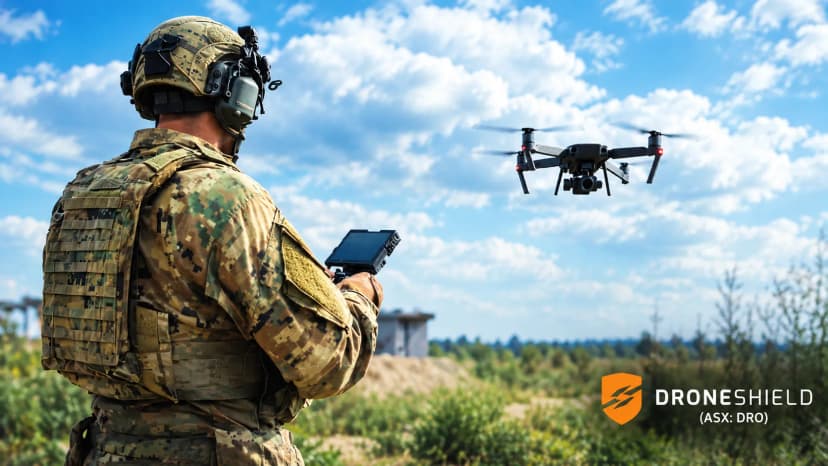
DroneShield (ASX: DRO): Strong Growth, but Can Earnings Catch Up?
DroneShield (ASX: DRO) delivered record 1H26 revenue of $125.8M (+74%) and growing recurring software revenue, but margins fell to 60%, costs surged, and a $32.2M statutory loss raises questions on whether earnings can catch up to justify its share price.

Why KTEK Aerosystems (ASX:KTK) 's $200k Defence Deal Is a Huge Opportunity
KTEK Aerosystems (ASX: KTK) secured its first order from a major Israeli defence prime, a modest US$200,000 milestone within a US$994,100 work package. The real opportunity is a potential US$5 million pipeline, contingent on clearing upcoming engineering reviews and further customer orders.

AML3D (ASX: AL3): Submarine Parts Order Lifts Shares Toward a Key Chart Level
AML3D (ASX: AL3) shares jumped after securing a first US Navy submarine parts order from Austal USA, building on record FY26 revenue. Trading above key support, the stock now tests a technical trigger level, with a confirmed breakout above $0.165 needed to signal further upside.
.webp&w=828&q=75)
Titomic (ASX: TTT): US Air Force Contract Win Follows $16.5 Million Capital Raise
Titomic (ASX: TTT) shares rallied after a US$5 million Air Force contract, following a $16.5 million placement. The advanced manufacturer, still loss-making, is progressing a US redomiciliation while shares test key support with a potential trendline breakout ahead.
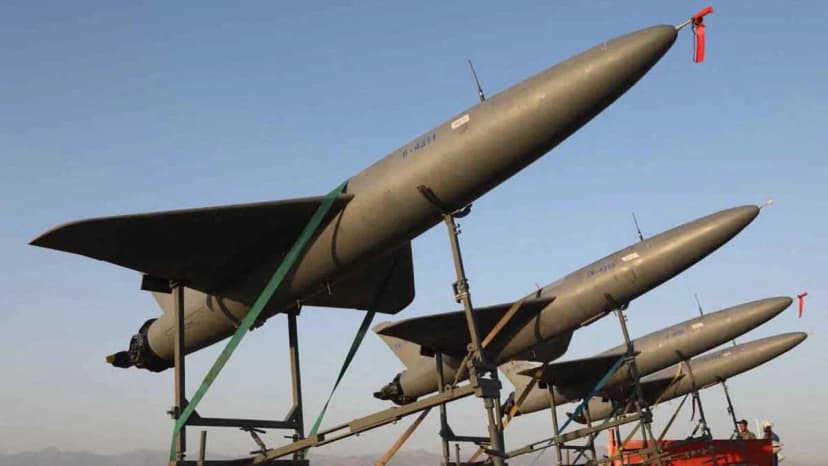
These ASX stocks give you exposure to the rising interest in defence spending
Rising geopolitical tensions and military modernisation are driving a surge in global defence spending, which exceeded US$2.6 trillion in 2025. Australia is also increasing defence investment, with spending expected to approach A$100 billion by 2034. As a result, ASX-listed companies involved in defence technology, shipbuilding and security systems are gaining investor attention as part of a long-term growth trend.
Investing in ASX Defence Stocks: A Complete Guide
What are Australian Defence Stocks? Defence stocks are shares of companies involved in creating, supplying, or maintaining military hardware, technology, and services. These firms enable national security, from fighter jets and tanks to cybersecurity systems and logistics support. What makes this sector distinct is that most of its revenue comes from government contracts rather than consumer demand, which gives it stability that many other industries lack
Within the defence sector, there are several sub-sectors. First, there are weapons and combat vehicles, including missiles, armoured vehicles, ships, and related weaponry. Next, aerospace & aviation, aircraft (military or dual-use), helicopters, drones and their components. Then, cybersecurity and electronics, including digital warfare, surveillance, sensors, and communication systems. Also, there are support services & logistics, R&D, testing, infrastructure & maintenance.
Because defence spending often responds to geopolitical tensions, legislation, and national security priorities, these stocks tend to have cycles tied to politics and global events. That makes them both interesting and risky for investors looking at investing in ASX defence stocks.

What makes investment in the Defence Stocks attractive?
Here are the significant factors that make investing in defence stocks attractive:
1. Rising Geopolitical Tensions & Global Security Threats
When countries feel threatened by neighbouring conflicts, border disputes, cyberwarfare, or increasing geopolitical rivalry, governments tend to respond by increasing spending on defence. That means more contracts for companies that build weapons, surveillance systems, cybersecurity tools, etc. Defence firms can often count on multi-year demand rather than short bursts because these threats are usually long-term (e.g., competition among superpowers, new kinds of warfare, climate change creating instability). That adds some stability to revenue forecasts.
2. Strong and Increasing Government Spending / Commitments
Defence companies rely heavily on government contracts. When governments commit more budget to defence, that directly boosts potential revenues for firms in this sector. Also, governments often sign multi-year contracts, which gives predictability. Significant budget increases are often driven by policy decisions (e.g., NATO targets for GDP share spent on defence), rearmament after years of underinvestment, or reactions to crises. They provide a boost (lifting demand overall) and an opportunity (new kinds of contracts) for firms.
3. Technological Innovation & Dual-Use Technologies
Defence isn’t just about tanks and jets anymore. Advances in tech are reshaping what militaries want: drones, artificial intelligence (AI), unmanned systems, cybersecurity, space capabilities, sensors, and communications. Many of these technologies have civilian uses (“dual-use”), which can help firms spread risk, innovate faster, and tap into multiple revenue streams. Firms that excel at innovation may gain a competitive advantage, win new contracts, and maintain higher margins, especially as old technologies become obsolete.
4. Long-Term Contracts & Backlog as Revenue Visibility
One big advantage defence companies often have is that once they win a contract, that work usually spans many years and involves substantial up-front investments. There tend to be significant backlogs (orders signed but not yet delivered), which give visibility into future revenues. Backlog provides some insulation from economic cycles. That makes earnings more predictable, which investors tend to like. It reduces risk relative to companies whose revenue depends solely on market demand without government backing.
5. Supply Chain Strength, Domestic Production & Strategic Autonomy
In recent years, governments have become more concerned about supply chain vulnerabilities, especially for critical defence equipment and materials. Wars and disruptions (e.g., in Ukraine, or fears of adversarial interference) have shown how fragile it can be if you rely heavily on foreign suppliers. So many countries are pushing for local production or strategic autonomy, producing more of their defence hardware domestically and securing critical supply chains. That tends to favour companies based in those countries or those that localise manufacturing or supply. Companies that are well-positioned in local supply networks or adapt early to local production requirements may benefit disproportionately.

A List of Defence Stocks in Australia (ASX)
Here are the key Defence subsectors on the ASX:
1. Shipbuilding, Naval & Marine Systems
Austal Ltd (ASX: ASB): Is probably the best-known name here. It builds commercial and defence vessels, with shipyards in Australia, the U.S., the Philippines, etc. Its order book is strong, supported by U.S. naval programs and other international contracts.
Civmec Ltd: Is another player (engineering, fabrication, shipyards). It provides structural and construction support to marine and defence projects.
2. Counter-Drone, Surveillance & Electronic Systems / Sensors
Electro Optic Systems Holdings Ltd (ASX: EOS): Operates in advanced weapon systems, counter-drone tech, and space domain awareness.
DroneShield Ltd (ASX: DRO): Is a focused player in counter-drone systems (detection, neutralisation). Works both in Australia and overseas.
3. Additive Manufacturing / Materials / “Enabling Tech”
Titomic Ltd (ASX: TTT): Specialises in cold spray additive manufacturing and related materials technology, which is used in aerospace, defence, etc.
Codan Limited (ASX: CDA): Also operates in communications, high frequency radio, and detection/electronics, so it overlaps with the sensor and communications subsector.
4. Naval-Related Components and Subsystems / Suppliers
VEEM Ltd: Supplies gyro and stabilisation equipment for naval vessels, etc. It doesn’t get as much attention as the primes (shipbuilders), but it has niche products and could benefit from maritime programs.
(Note: For investors seeking diversified exposure without picking individual stocks, an ASX Defence ETF like those from BetaShares or VanEck can be a viable option. We will cover these in a separate, dedicated guide.)
Which Areas Seem Best If we were picking where the “sweet spots” are right now, we’d lean toward:
Counter-drone / surveillance/sensors: because growth is likely substantial, many “threats” are moving toward unmanned or remote systems, favouring these kinds of firms.
Shipbuilding / naval prime contractors: Australia is committed long-term to strengthening its navy; big projects (e.g., AUKUS, patrol vessels, submarines, landing craft) mean large contracts and strong government backing.
Niche enabling tech: Firms that can supply specialised components or do additive manufacturing/materials/innovative electronics are good if you believe governments will continue pushing for domestic supply chains and technology sovereignty. It is also worth diversifying: combining a stable prime contractor (less risky, large scale) with smaller firms in niche areas (higher growth but higher risk).
How to Evaluate ASX Defence Stocks
Here are key factors to consider when choosing top performing defence stocks on the ASX:
1. Government Contracts & Backlog
What to look for:
Does the company have firm contracts with Australia or the central allied governments?
How large is its backlog of orders (signed but not yet delivered)?
What is the contract duration, payment schedule, and margins? Defence firms depend heavily on large government contracts. These contracts provide revenue visibility, reduce uncertainty, and often come with favourable risk allocation (e.g., cost escalations, performance guarantees). A substantial backlog means future revenue is more certain.
2. Technological Edge & Specialisation
What to look for:
Unique technologies (drone detection, counter drone, surveillance sensors, autonomous systems, etc.).
A R&D pipeline, patents, partnerships or collaborations with research institutions.
Ability to innovate faster than peers, or to evolve/upgrade existing systems. Defence requirements change rapidly (e.g. unmanned systems, AI, cyber domain). Firms that adapt are better placed to win future contracts. Specialised capabilities also impose higher barriers to entry, helping protect margins.
3. Financial Health & Valuation Metrics
What to look for:
Revenue growth, profit margins, cash flow (especially free cash flow).
Debt levels, liquidity, and ability to fund growth or absorb shocks.
Valuation metrics (P/E, P/S, EV/EBITDA) and whether current prices already reflect expected growth. Even with good contracts and technology, a company that burns cash, has a weak balance sheet, or is overvalued is risky. Good financial health helps absorb delays, cost overruns, or regulatory hurdles.
Expert Note: At Proactive Equities, our analysis of defence stocks is heavily weighted towards contract quality and backlog. Unlike consumer stocks, a defence company's value is tied to its long-term revenue visibility. Our analyst team scrutinises the size, duration, and counterparty (i.e., which government) of these contracts. A large, multi-year backlog with a reliable government like Australia or the US is a critical E-E-A-T signal we look for before recommending a stock in this sector.
4. Alignment with Government Policy, Geopolitics & Strategic Priorities
What to look for:
Does the company operate/offer the capability that the Australian government or its defence strategic reviews emphasise (naval, space, autonomous systems, domestic capability, etc.)?
Is there geopolitical tension or strategic imperatives (e.g., Indo-Pacific security, supply chain resilience) that may push governments to increase defence spending in certain areas?
Does the company benefit from "sovereign" capability demands (i.e. governments preferring domestic suppliers)? Policy rather than purely economic reasons often shape defence spending. If a firm’s product lines match what governments consider priorities, then that firm is more likely to receive ongoing support, favourable procurement decisions, and possibly subsidies or protective measures.

What are the Risks of Investing in Defence Stocks?
Here are significant risks you need to watch when investing in defence stocks:
1. Policy / Procurement Uncertainty
One significant risk is that government defence spending, contracts, and procurement programs are heavily influenced by politics, changing governments, budget pressures, and strategic priorities. A project may look solid one year, but then get delayed, re-scoped, or cancelled altogether. There have been concerns over a lack of certainty in Australia's defence spending plan. For instance, industry leaders have called for clearer, long-term government commitment on major shipyard projects and defence contracts to give private investors confidence. Also, policy shifts (e.g. change of administration, changing defence doctrine, or shifting strategic alliances) can alter which capabilities are prioritised. A stock expecting large contracts for submarines or autonomous systems may suffer if the government cuts back or reprioritises. This risk means that even if you pick a company with strong tech or good current contracts, its future pipeline could dry up. Investors should look for long-term contracts, public commitment (in policy documents), and legislative or budgetary support. They should also assess the degree to which a company depends on a single contract or single government customer—diversification here helps.
2. Geopolitical / Regulatory Risk
Defence is connected to geopolitics. That brings risks:
Conflicts may escalate, leading to sanctions, export restrictions, or trade barriers that hurt companies’ ability to sell overseas.
Regulations around arms exports, national security, or “sovereign capability” can restrict foreign ownership, supply chain access, or force localisation of production.
New laws (for example, Australia’s military secrets laws) can have unintended consequences, limiting talent movement, delaying permits, or increasing compliance costs. Also, as global geopolitical dynamics shift, what was once an advantageous contract region might become risky. Investors must monitor domestic politics and international law, sanctions regimes, alliances, and the friendliness of foreign markets for exports of defence equipment.
3. High Costs, Execution Risk & Delays
Defence projects are notoriously expensive and complex, and they are subject to cost overruns, delays, supply chain bottlenecks, and technical risks. Building ships, advanced electronics, or new aircraft involves not just R&D but materials, highly specialised labour, certifications, regulatory approvals, and often custom engineering. Every one of those can go wrong. Delays in delivery or failure to meet performance specifications can lead to penalties, reputational damage, or even cancelled contracts. For example, even strong ASX defence firms can have a stretched supply chain and manufacturing capabilities. The use of advanced components (like sensors, AI, or advanced materials) often depends on imported inputs that might be affected by trade disruption. If a company doesn’t manage these well, its projected profits and timelines may diverge sharply from reality. Assessing management capability, past performance on projects, supplier robustness, and whether the company has buffer or contingency plans is essential.
4. Financial & Valuation Risks
Bad financials can sink a stock even in a growth area like defence. Many defence stocks are priced for growth: investors expect rising contracts, margins, or rapid expansion. If expectations are too optimistic, the valuation may already embed most of the “good news,” leaving limited upside and more downside. High R&D or capital investment needs may mean harmful or volatile cash flow. If revenues are delayed or the contract is late, firms may need to raise debt or equity, diluting shareholders. Costs like inflation, labour, raw materials (steel, electronics), and interest rates can squeeze margins. For example, reports note that some ASX defence stocks look “priced to perfection,” and many small misses (in contract, cost, or government timing) could lead to sharp downward stock moves
5. ESG (Environmental, Social, Governance) and Public Perception Risks
Defence industries often face ethical, environmental, and social scrutiny. These aren’t just abstractions—they can have real consequences for licensing, regulatory approvals, investor sentiment, and access to capital. Some investors, especially institutional ones (superannuation funds, ESG-focused funds), may avoid defence stocks on principle or impose constraints (e.g., how much revenue comes from weapons, type of weapons, etc.). This may limit the pool of buyers or increase the cost of capital. Environmental concerns (manufacturing pollution, carbon footprint of military hardware, mining raw materials), social concerns (civilian impacts, arms proliferation) or governance concerns (transparency, compliance, corruption) may spur regulation, taxes, or public backlash. Because of this, even profitable defence companies may face delays in approvals, difficulty in export licensing, or reputational risk, which can affect share price.
Conclusion: Should You Be Investing in ASX Defence Stocks?
Investing in ASX defence stocks offers exposure to a sector driven by non-cyclical government spending and long-term geopolitical trends. The rise of new technologies like counter drone systems and the push for domestic production create clear opportunities. However, as this guide has shown, this is a highly specialized area. The risks of investing in defence stocks, particularly policy uncertainty and project execution delays, are significant. Success requires a deep understanding of government priorities and a focus on companies with strong, visible contract backlogs.
FAQs on Investing in Defence Stocks
Which stocks are referred to as Defence Stocks? Defence stocks are companies that design, manufacture, or supply military equipment, technologies, and services, such as ships, drones, surveillance systems, and communications.
What makes investment in the Defence Stocks attractive? They benefit from rising global defence spending, long-term government contracts, innovation in technologies like drones and AI, and demand for domestic production.
What are some high-risk factors associated with investing in the Defence Stocks? Key risks include policy uncertainty, project delays, high costs, regulatory restrictions, and ESG concerns that may affect investor sentiment.