

Gold Stocks

Caprice Resources (ASX: CRS): Valuing the Gold Before It Becomes a Resource
Caprice Resources (ASX: CRS) is an exploration-stage gold company focused on Western Australia’s Murchison Goldfields. Its Island Gold Project is advancing toward a maiden MRE, supported by high-grade drilling, while valuation remains highly dependent on exploration success and future resource definition.
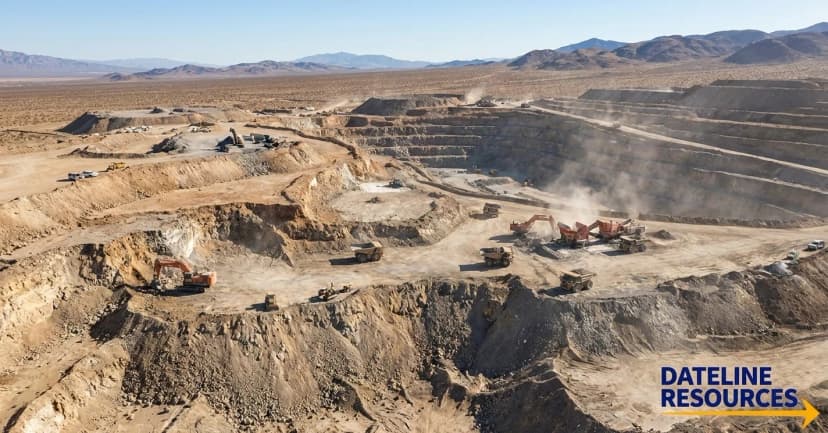
Dateline Resources (ASX: DTR): National Security Case Gives Colosseum Rare Earths Bid New Life
Dateline Resources (ASX: DTR) has gained US Department of War backing in its bid to restart Colosseum, a gold and rare earths project in California, as a key court hearing nears.
.webp&w=828&q=75)
Northern Star Resources (ASX: NST): A$38.7B Gold Fields Bid Rejected as Elliott Pressure Builds
Northern Star Resources (ASX: NST) has rejected Gold Fields’ A$38.7 billion takeover proposal amid increased pressure from Elliott Investment Management and leadership changes, while continuing to advance KCGM expansion, Hemi development, and its long-term growth strategy.
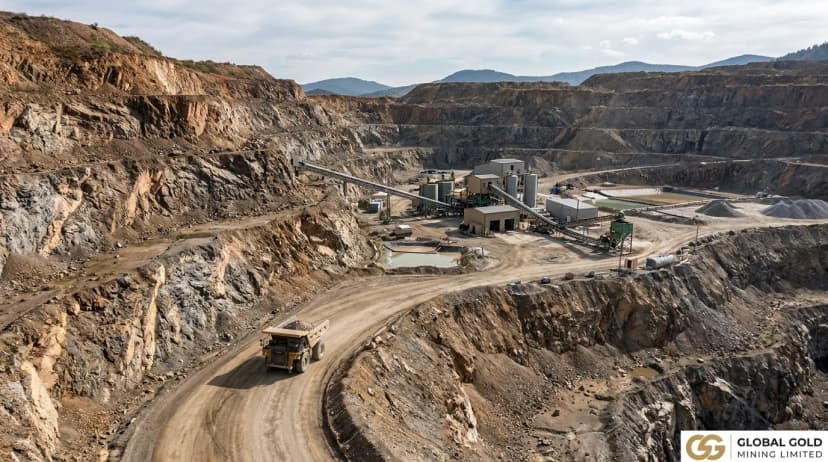
Global Gold Mining (ASX: GGM): Simplifies Sturec Processing With 91% Gold Recovery
Global Gold Mining (ASX: GGM) has returned gold recoveries above 91% from metallurgical testwork at its Sturec deposit in Slovakia, using a simplified flotation flowsheet that supports the project's pre-feasibility study.
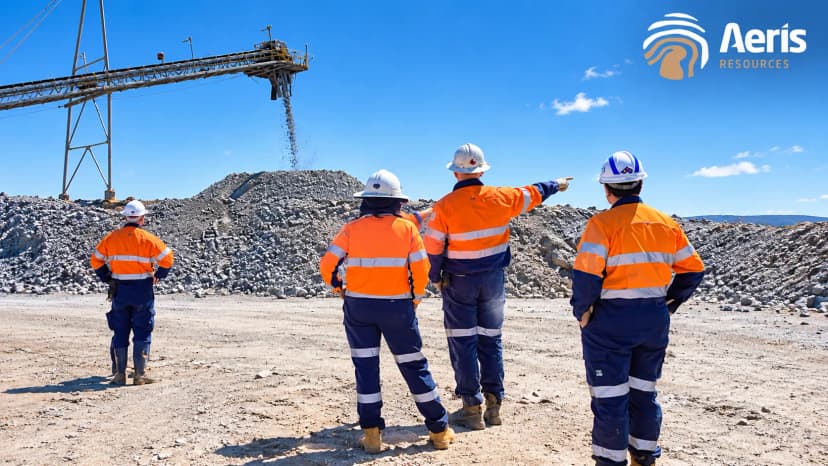
Aeris Resources (ASX: AIS): Strong Earnings Today, Longer-Term Value Beyond Cracow
Aeris delivered strong FY26 earnings and cash flow, underpinned by Tritton and Cracow, with no debt. Growth projects support longer-term value, but higher FY27 capital spending and Cracow’s limited reserves create execution risks.
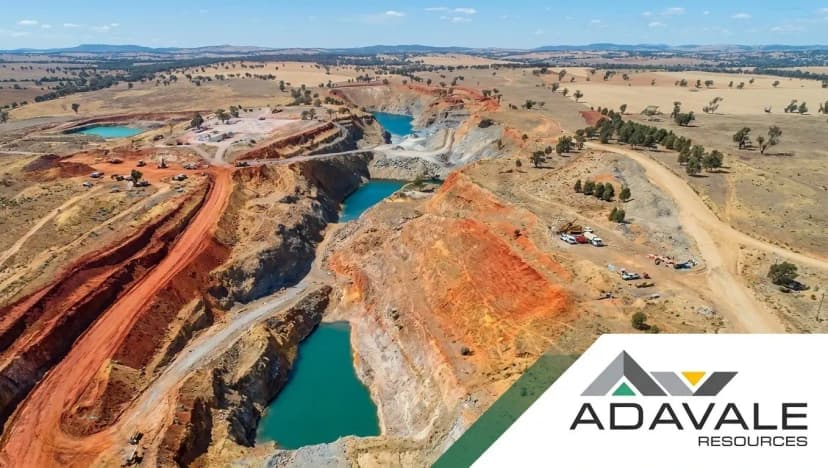
Adavale Resources (ASX: ADD): The 20-Month Build of Its Parkes Gold Inventory
Adavale Resources (ASX:ADD) has boosted its Parkes gold inventory to 383,300 ounces, up from zero in under 20 months. London-Victoria grew 228% to 262,700 ounces after Adavale's first independent drilling in 30 years, with satellite deposits and Calarie adding further scale.
Investing in ASX Gold Stocks: A Complete Guide
What are Gold Stocks? Gold stocks are shares in companies whose business revolves around gold, typically miners, explorers, royalty firms, or streaming companies. Rather than owning physical bullion, investing in ASX gold stocks allows investors to gain exposure to gold via corporate operations that dig, process, finance or profit from future gold production.
This guide will explore the drivers for gold mining stocks on the ASX, how to evaluate them, and the significant risks involved.
What makes investment in the Gold Stocks attractive?
Here are important factors that often drive strong performance in gold stocks on the ASX:
1. Gold price movements (leverage effect)
At its simplest, when gold prices rise, gold miners become more profitable, often disproportionately so. If a mine’s cost of production is $1,200 per ounce, and gold goes from $1,800 to $2,100, that’s a $300 increase in gross margin (25 % higher margin). For the company, that extra margin can translate to much more earnings growth, which often gets amplified in the stock price.
Many gold stocks exhibit leverage to the gold price: a modest percentage rise in gold price might lead to a larger percentage rise in the stock price. Conversely, when gold falls, the downside gets magnified too. (This is one reason investing in ASX gold stocks is more volatile than buying gold bullion). Because future gold supply is relatively fixed in the short term, and given strong demand (more on that), investors often expect sustained pressures on gold (inflation, currency weakness, safe-haven demand) could push gold higher, benefiting gold mining equities.
2. Real interest rates and monetary policy
Gold doesn’t pay income (interest, dividends) like a bond or a savings account. So gold and gold stocks become more attractive when real interest rates (interest rates minus inflation) are low or falling. When real rates drop or turn negative, the opportunity cost of holding a non-yielding asset falls. Central banks cutting rates or keeping monetary policy loose tend to help gold. Looking ahead: with many economies wrestling with inflation, debt, and uncertain growth, central banks may feel pressured to keep rates lower for longer, or cut them in cycles. That could maintain a friendly backdrop for gold stocks.
3. Inflation and currency debasement
Gold is often considered a hedge against inflation and the erosion of fiat currency value. When inflation expectations rise or when a currency (especially the U.S. dollar) weakens, gold tends to rally because it preserves "real" value. For gold stocks, this is doubly helpful: operating costs (labour, energy, equipment) may rise with inflation, but if gold prices rise faster, profit margins widen. In a future environment where inflation remains sticky, investors may increasingly turn to gold and gold equities as “inflation insurance.”
4. Safe-haven demand, geopolitical and economic uncertainty
Gold (and by extension gold stocks) tends to attract capital when markets are jittery. Wars, political instability, debt crises, and currency crises tend to push investors toward assets perceived as stable or uncorrelated with equities. If the world remains volatile due to climate risks, geopolitical tensions, trade disputes, or financial stresses, gold stocks remain a natural destination for “crisis alpha.” Many investors view them as insurance in bad times.
5. Operational improvements, cost control, and capital discipline
This is more company-specific, but critical. Even if gold prices rise, miners that keep costs under control, de-risk operations, reduce debt, and invest wisely tend to outperform. If companies shrink cost per ounce (through more efficient mining, better technology, scale) or retire debt, more of the incremental gold revenue flows to shareholders. Also, reasonable capital allocation, e.g., paying dividends or doing share buybacks instead of reckless expansion, appeals to investors and can lead to multiple expansions. In the future, as gold companies mature and face scrutiny, those with strong management and balance sheets may outperform peers.

A List of Australian Gold Mining Companies (By Tier)
On the ASX, you’ll commonly see:
Senior / producing gold miners:
Characteristics: These companies have operating mines, cash flow, scale, and production risk exposure.
Companies (ASX): Northern Star (NST), Evolution Mining (EVN), Westgold (WGX),Regis Resources (RRL)
Mid-tier / growth/development miners:
Characteristics: Firms with some operations but more upside from expanding, discovering, or developing additional mines.
Companies (ASX): Perseus Mining (PRU),Gold Road Resources (GOR), De Grey Mining (DEG)
Junior/exploration stocks:
Characteristics: Higher risk, early stage; many have no production yet, but potential for significant discovery gains (or total failure).
Companies (ASX): Forrestania (FRS), Native Mineral Resources (NMR), Trek Metals (TKM
(Note: For investors seeking broad exposure without picking individual stocks, an ASX gold ETF can track the performance of the gold price or a basket of miners. We discuss the gold stock vs gold ETF debate in a separate guide.)
Which area might offer better opportunities?
That depends on your risk appetite and investment horizon, but here’s a view:
Balance toward mid-tier and royalty exposure: The senior producers are relatively “safe bets” but more vulnerable to valuation and competition. The real upside often lies in mid-tier miners stepping up or royalty vehicles collecting income with less downside risk.
Select juniors with coherent catalysts: For those who can stomach volatility, a small allocation to junior gold miners with strong projects or clear upcoming catalysts (drilling, resource upgrades, permitting) can deliver outsized returns. But you’ll need to be choosy and prepared for failures.
Avoid overcrowded trades: Some names will already be heavily bid (e.g., NST, EVN), so the upside in those may be more limited compared to secondary names with upside potential, such as undervalued gold stocks on the ASX.
How to Find Top-Performing Gold Stocks on the ASX
If you want to pick the best Australian gold stocks (or anywhere), it's not enough to “hope gold goes up”; you need a checklist. Here are factors to evaluate:
1. Cost structure: All-in Sustaining Cost (AISC) and cash costs
One of the most critical metrics in gold mining is how much it costs to produce each ounce. The industry standard now is All in Sustaining Cost (AISC), which includes indirect mining costs, sustaining capital, overhead, and other expenses needed to maintain current operations. A miner with a low AISC relative to peers has more “buffer” if gold prices fall, and more upside if gold rises further.
For example, if a miner has AISC of USD 1,200/oz and gold is USD 1,800/oz, there’s a USD 600 margin. However, if gold drops to USD 1,600, that margin narrows or disappears for high-cost producers. The companies that survive downturns are often those with the lowest cost base.
Aside from AISC, also look at cash cost, but be cautious. Cash cost often omits sustaining capex or corporate overhead, so it may understate the true cost burden. Always compare cost metrics across peers and check whether cost estimates are realistic or likely to rise (e.g., due to energy, labour, or royalties).
2. Size, quality and life of reserves (Proven & Probable Reserves + Reserve Life Index)
A mining company's reserves are its “fuel tank,” indicating how much gold it has and how confidently it can extract it. You want to check Proven and probable Reserves (P&P) and a Reserve Life Index (how many years of production remain under current reserves). High-grade reserves are especially valuable: they tend to cost less to mine per ounce (less waste, better recoveries). Also, a company with a long reserve life (say 10+ years) is less risky; it won’t need to rely on new exploration constantly. If reserves are small or uncertain, you risk production shortfalls.
Another metric is resources beyond reserves. Some companies may have large “Inferred resources” or greenfield potential. But be careful: resources are speculative, and not all become reserves. Thus, a top gold stock should not only have production now but also a well-documented pipeline of reserves and credible growth.
3. Financial health: debt, cash flow, capital discipline
A great mine is useless if the company is choking on debt or can’t finance its growth. So you must dig into the balance sheet and cash flow statements. Key things to check:
Debt levels vs cash flow: What’s the debt-to-equity ratio? Can the company service its debt comfortably if gold prices drop?
Free cash flow: Is there leftover cash after paying for sustaining capital? Positive free cash flow allows dividends, buybacks, or reinvestment.
Capital discipline: Does management tend to overspend or chase risky projects, prefer taking profits, paying down debt, or buying back stock? A mining company that overleverages or misallocates capital can get into serious trouble in downturns. However, those with conservative financing often survive volatility and gain investor trust.
Expert Note : When the Proactive Equities analyst team evaluates gold mining stocks on the ASX, we are relentless in our focus on AISC and Balance Sheet Strength. The gold price is uncontrollable, but costs and debt are. Our framework filters for low-cost producers (low AISC) that generate free cash flow and maintain capital discipline. This is the non-negotiable foundation for finding the best Australian gold stocks that can thrive in any gold price environment.
4. Geopolitical, jurisdictional & operational risk
Mining doesn’t happen in a vacuum. The country, region, permitting, environmental rules, infrastructure, and political stability matter hugely. Even if a company has superb reserves and low costs, it may be exposed to:
Regulatory risk/permitting delays: Environmental approvals, land access, and communities.
Political risk: Changes in mining law, taxes, royalty regimes, and nationalisations.
Infrastructure & logistics: Remote sites might have access issues (roads, power, water).
Operational risk: Weather, geological surprises, power costs, equipment breakdowns, labour disputes.

What are the Risks of Investing in Gold Stocks?
When you invest in gold stocks, you're not just buying bullion; you're buying into companies with real costs, operations, people, politics, and risks. Below are risks you must watch out for and how each can upend your upside.
1. Commodity/gold price volatility
Gold stocks are susceptible to the price of gold itself. If gold drops, mining companies' profitability shrinks fast (often more than linearly). Because many miners have fixed and semi-fixed costs, a decline in gold can push marginal mines into loss or force cutbacks. Research shows that gold mining equities tend to have “fat tails” in their risk profiles, meaning extreme downside moves are more frequent than in normal stocks. Also, some companies hedge part of their future production, locking in forward sales. That can blunt upside when gold surges, but it gives them some protection on the downside. If gold’s rise is short-lived or reverses, your gold-stock position could suffer substantially.
2. Cost overruns, operational problems, and production risks
Mining is messy, capital-intensive, and fraught with uncertainties. A planned project can run over budget, suffer supply chain bottlenecks, equipment breakdowns, geological surprises (ore quality lower than expected), or processing issues (metallurgy problems, recoveries below forecasts). These problems can delay production, increase costs, and eat into margins. Additionally, mines sometimes underperform relative to forecasts because of weather, power interruptions, labour disruptions (strikes), or safety shutdowns. Even a short outage can be costly. In extreme cases, if the technical or financial issues are severe enough, mines may be shuttered for long stretches.
3. Jurisdictional, regulatory, and political risk
Mineral rights, permits, environmental laws, taxation, and royalty regimes vary a lot by country and region. A gold stock with mines in jurisdictions with unstable or shifting regulatory regimes is vulnerable to:
Unexpected changes in tax or royalty rules
Expropriation, nationalisation, or renegotiation of contracts
Permit delays or rejections
Local opposition or community disputes over land, environmental impact Because Australian gold mining companies often operate in remote or less stable regions globally, these risks can materially affect the project’s viability or cash flows. One poorly timed political or legal shift can wipe out expected returns or threaten operational continuity.
4. Leverage, debt, and capital structure risk
Mining operations require substantial capital for expansion, sustaining capital, exploration, maintenance, and repairs. Many gold producers carry high levels of debt or leverage relative to their cash flows. If the gold price weakens or costs rise, debt servicing becomes a drag, and a company can be forced to cut dividends, sell assets, or raise dilutive equity. Cash flow volatility exacerbates this: because mining revenue is lumpy (driven by production, seasonal changes, and gold price), a miner may face periods of stress when revenues fall short of projections. Companies with weak balance sheets often fare poorly during those squeezes. If a company overextends on expansion (i.e. chasing growth with debt), it may be less able to absorb shocks.
5. Market risk, sentiment, and correlation with equities
Even though gold stocks are sometimes viewed as a hedge or a “gold proxy,” they are still publicly traded equities. So they are subject to broad market swings, sentiment shifts, and risk-off behaviour. During market panics or credit crunches, gold stocks might get sold along with other high volatility names, regardless of their fundamentals. Also, perceiving them as “leveraged gold bets” means that investor sentiment (fear, momentum, outlook for rates) can drive big swings. Because these stocks often exhibit higher volatility than gold, they may overshoot on both the upside and the downside.

Conclusion: Should You Be Investing in ASX Gold Stocks?
Investing in ASX gold stocks offers powerful, leveraged exposure to the gold price, acting as a hedge against inflation and geopolitical uncertainty. However, as this guide has shown, these are not simple proxies for bullion. The risks of investing in gold stocks operational, financial, and political are significant. Success in this sector requires a deep understanding of mining costs (AISC) and identifying well-managed companies that can deliver profits even when the gold price is not soaring.
FAQs on Investing in Gold Stocks
Which stocks are referred to as Gold Stocks? Gold stocks are shares of companies involved in the exploration, mining, refining, or financing of gold production.
What makes investment in Gold Stocks attractive? They offer leveraged exposure to gold prices, act as a hedge against inflation and market uncertainty, and can deliver high returns when gold prices rise.
What are some of the high-risk factors associated with investing in Gold Stocks? Major risks include gold price volatility, high production costs, operational challenges, political or regulatory instability, and overall market fluctuations.