

Copper Stocks
.webp&w=828&q=75)
Lincoln Minerals (ASX: LML): Minbrie Copper System Sets Stage for Q4 2026 Diamond Drilling
Lincoln Minerals (ASX: LML) has identified additional copper and base-metals mineralisation at its Minbrie Project, with recent drilling supporting its geological model and diamond drilling planned for Q4 2026, positioning Minbrie for its next stage of exploration.
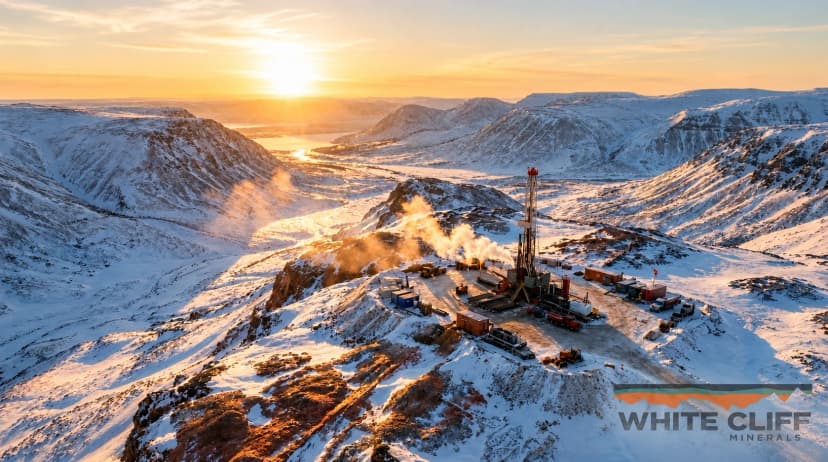
White Cliff Minerals (ASX: WCN): New Copper Front at Bornite Hills Sparks a Chart Breakout
White Cliff Minerals (ASX: WCN) opened a new copper discovery front at Bornite Hills, part of its Rae Copper Project, with assay results due October 2026. Shares broke out a key resistance level, though an overbought RSI suggests a pullback to support may occur first.
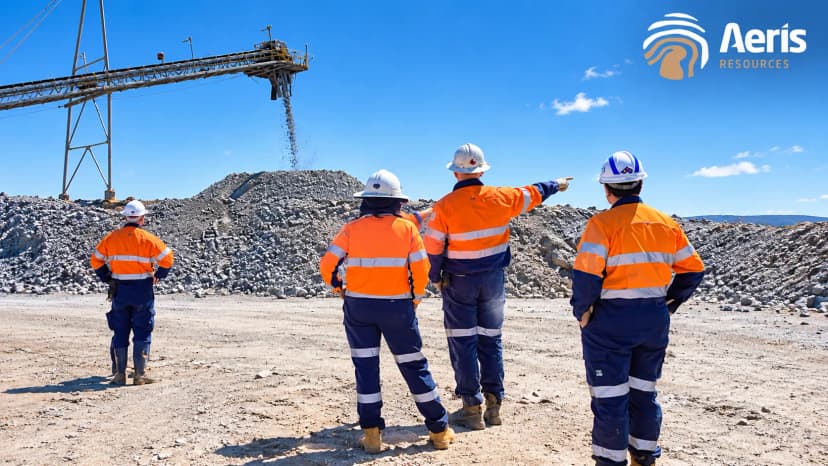
Aeris Resources (ASX: AIS): Strong Earnings Today, Longer-Term Value Beyond Cracow
Aeris delivered strong FY26 earnings and cash flow, underpinned by Tritton and Cracow, with no debt. Growth projects support longer-term value, but higher FY27 capital spending and Cracow’s limited reserves create execution risks.
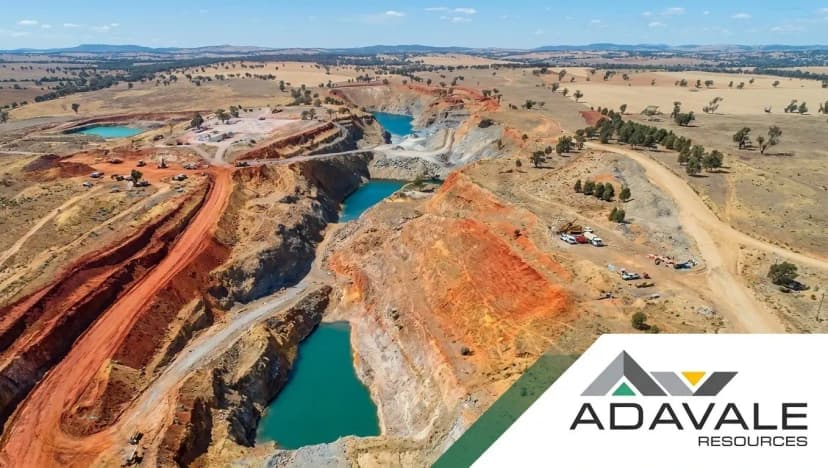
Adavale Resources (ASX: ADD): The 20-Month Build of Its Parkes Gold Inventory
Adavale Resources (ASX:ADD) has boosted its Parkes gold inventory to 383,300 ounces, up from zero in under 20 months. London-Victoria grew 228% to 262,700 ounces after Adavale's first independent drilling in 30 years, with satellite deposits and Calarie adding further scale.
.webp&w=828&q=75)
Golden Deeps (ASX: GED):10-Month Descending Channel Ends as High-Grade Graceland Results Surge
Golden Deeps is advancing deeper drilling at Graceland after encouraging copper, silver and zinc results. Fresh assays and new targets have strengthened interest in the Namibian exploration program, while upcoming drilling will test the discovery’s potential scale.
IGO (ASX: IGO): Operational Discipline and Strategic Refocus Amid Energy Transition
IGO (ASX: IGO) delivers strong FY26 results with disciplined execution, expanding margins at Greenbushes and Nova, and strategic portfolio optimisation aligned with global energy transition.
Investing in ASX Copper Stocks: A Complete Guide
What are Copper Stocks? Copper stocks refer to shares of companies whose core business involves copper, from digging it out of the ground to turning it into usable metal and related products. At its heart, the copper sector links mining, processing, and manufacturing and is part of the broader materials and basicindustries universe.
For investors considering investing in ASX copper stocks, this sector offers a unique blend of traditional industrial demand and new-age green energy growth.
What makes investment in the Copper Stocks attractive?
Here are factors that often drive the appeal (and risk) of investing in copper stocks:
1. Structural demand from electrification & green energy
Copper is central to many technologies tied to the energy transition: electric vehicles, charging infrastructure, grid expansion, renewable energy (solar, wind), and battery storage. Renewable systems tend to need more copper per megawatt installed than conventional power plants. As countries push toward net-zero targets and clean-energy policies, copper may see sustained “structural demand.” Strong demand growth can lift copper prices, improving margins for copper miners on the ASX. A miner with low production costs or untapped reserves can benefit disproportionately when the price increases.
2. Supply constraints & rising costs of new production
On the supply side, copper faces headwinds. Many existing mines are aging, and ore grades are declining, making extraction more expensive. Discovering and developing significant new copper deposits is capital-intensive, risky, and slow (often taking years or even a decade to bring new supply online). Underinvestment in new supply has been flagged in multiple industry outlooks. Disruptions (labour, regulation, energy costs, environmental constraints) can further tighten supply. This combination means that supply may struggle to keep up with rising demand, increasing the likelihood of deficits. The scarcity or constraint in supply gives miners pricing power.
3. Copper as a “bellwether” commodity/correlation with global growth
Historically, copper has been nicknamed “Dr Copper” because its demand is tightly linked to industrial activity, infrastructure, construction, and general economic health. When global economies expand, demand for wiring, buildings, factories, appliances, etc., rises, pushing copper demand (and price) up. Conversely, in recessions, copper demand often softens first. Copper stocks often outperform other sectors, riding the wave of industrial expansion. Investors often see them as a cyclical play, but that also means they can suffer more sharply in downturns.
4. Inventory / stock levels & market tightness
Beyond production and demand flows, the balance between stocks/inventories and just-in-time usage matters. If inventories in exchanges or warehouses shrink, markets can swing sharply even on modest demand fluctuations. Researchers point out that copper pricing is sensitive to changes in inventory buffers. When inventories are low, any supply hiccup or demand surprise can lead to outsized upward price moves. For example, if a smelter goes offline unexpectedly or a primary mine is delayed, the market reaction is amplified when stock buffers are thin.
5. Financial/leverage effect & sentiment/capital flows
This factor is more about how markets operate and less about physical copper, but it's important. Leverage and derivative markets (futures, options, ETFs, or funds focused on copper or mining stocks) can magnify price moves. Speculative capital flows in or out can swing valuations beyond fundamentals. In risk-on environments, speculative money often flows into cyclicals, including metals and materials. That can push copper stocks higher even before fundamentals fully justify it.
An ASX Copper Companies List (Areas for Investment)
On the ASX, you can find copper exposure across different tiers:
1. Diversified Majors
These are large mining companies with many commodities in their portfolios (not pure copper plays). Their scale gives them more stability, but less pure upside from copper price moves.
BHP (ASX: BHP): One of Australia’s largest mining houses, with significant copper assets (e.g. the Olympic Dam project).
Rio Tinto (ASX: RIO): While better known for iron ore, aluminium, etc., Rio also has copper operations and participates in joint ventures.
2. Best ASX Copper Stocks (Mid-Tier Pure Plays)
Mid-tier / pure-play copper producers lean more heavily on copper for their earnings and thus offer more leverage to copper’s upside (but also downside). These mid-tiers are often the “sweet spot” for many copper investors seeking exposure and stability.
Sandfire Resources (ASX: SFR): Often cited as one of the more prominent “copper pure plays” on the ASX.
Capstone Copper (ASX: CSC): Although listed as “Capstone Copper Corp” on ASX, this gives direct exposure.
3. Development / Near-Producers
These companies have identified promising copper deposits and are pushing toward full production, but are not yet in large-scale production. These stocks tend to have higher risk (e.g., project delays, permitting, capital structure) but more upside if the project economics are compelling and copper prices rise.
Aeris Resources (ASX: AIS): Mentioned in commentary as a junior stepping toward mid-tier status in the copper space.
AIC Mines (ASX: A1M): Another junior flagged in industry coverage as aspiring toward mid-tier scale.
4. Best Copper Junior Miners (Explorers)
The next category are early-stage companies that are still searching for deposits, drilling, or conducting preliminary feasibility studies. Many will never reach production, which makes them high risk, high reward speculative investments.
Examples from Australian copper company listings: Austral Resources (AR1), Ballymore Resources (BMR), C29 Metals, Boadicea Resources (BOA), Helix Resources (HLX), MetalsGrove Mining (MGA), etc.
(Note: For investors seeking diversified exposure, a copper ETF on the ASX can track the price of the metal or a basket of miners without single-stock risk.)
Which areas offer better opportunities? There’s no one-size-fits-all answer. It depends on your risk tolerance, investment horizon, and conviction in copper’s trajectory.
Mid-tier / pure-play producers often hit a “sweet spot.” They are more responsive to copper price moves than diversified majors, but still have some operating cash flow or existing mines to de-risk the investment. Sandfire (SFR) is often mentioned as a name that has navigated transitions between assets fairly smoothly.
Development / near-producers have substantial leverage over discoveries or project milestones. Investors can reap significant gains if a company can produce a new copper mine at competitive costs. But many projects never succeed.
Explorers/juniors are the riskiest; many will fail, but a few could yield outsized returns if they hit a major deposit. If you allocate a small portion of your portfolio to these, the potential upside is big, but so is the risk.
How to Find Top-Performing Copper Stocks on the ASX
If you want to pick top-performing copper stocks on the ASX, it’s not enough to eyeball the share price; you must consider fundamentals, risks, and outlooks. Here are factors to analyse:
1. Cost structure & all-in sustaining cost (AISC)
One of the most important metrics is how cheaply a company can produce copper once all costs are counted (mining, processing, transport, sustaining capital, overhead). If a miner’s AISC is low relative to peers, it has more cushion when copper prices fall and more leverage when prices rise. When copper prices climb, low-cost producers see higher margins and profits grow more steeply. Always compare the AISC (or cash cost plus sustaining capital) across peers in the same region or grade bracket.
2. Reserve life & production growth pipeline
It’s not enough to produce profitably today, you want a company that can maintain or grow output over time. That depends on the life of its reserves and whether it has a solid pipeline of projects (expansions or new mines). A short reserve life means the company must continually find new resources or risk decline. Companies with promising development projects or brownfield expansions have optionality, if copper stays strong, they can scale. When screening on the ASX, look at the resource & reserve statements, planned expansions, and feasibility studies.
3. Jurisdiction / geopolitical & ESG risks
Where the mines operate matters as much as what they produce. Mines in politically stable, mining-friendly jurisdictions with clear regulation are less risky. ESG (environmental, social, governance) factors are increasingly important in the capital markets. Jurisdiction risk includes tax changes, royalty reforms, permitting delays, political unrest, or expropriation risk. ESG risks include water management, community relations, environmental compliance, and tailings dam safety. On the ASX, many copper stocks operate globally (e.g. in Latin America, Africa). So consider country risk indices and the company’s ESG track record.
Expert Note: When the Proactive Equities analyst team evaluates copper miners, we pay close attention to "Jurisdictional Risk". A high-grade copper deposit in an unstable region is often a value trap. We filter for companies operating in tier-1 mining jurisdictions (like Australia or parts of the Americas) or those with a proven track record of navigating complex political environments without operational disruption.
4. Balance sheet strength & liquidity / capital structure
Mining is capital-intensive. If a company has too much debt, poor cash reserves, or weak liquidity, it can get squeezed during down cycles, forced to cut production, raise equity, or even default. Check debt levels/leverage (net debt-to-EBITDA) and cash reserves. A company whose earnings are volatile but debt high is vulnerable. When screening ASX copper stocks, check debt metrics in financial reports, look at past capital raises (how dilutive they were), and whether the company is reliant on continued funding rounds.
What are the Risks of Investing in Copper Stocks?
Here are risks you should be aware of when investing in copper stocks:
1. Commodity price risk / volatility
Copper prices are notoriously volatile, swinging up or down sharply in response to global macroeconomic conditions, demand cycles, supply disruptions, and investor sentiment. For a copper miner, revenue depends heavily on the realised copper price; if the price falls below the company’s cost of production, profits can disappear or turn into losses. Because a copper stock’s value is leveraged to the commodity price, the downside is magnified. A 20% drop in copper price might cause a 50%+ drop in the stock price, especially for highly leveraged or speculative miners.
2. Operational / mining risks
Mining is a tough, capital-intensive business, and many things can go wrong: equipment failure, accidents, or unplanned shutdowns can halt production temporarily or longer. Geological risk means actual ore grades or recoveries might be lower than projected in feasibility studies. Cost overruns and unexpected increases in energy, labour, materials, or logistics can eat into margins. Natural disasters or geological events (e.g., earthquakes, floods) can disturb operations. Any of these operational failures directly reduce production, often at high fixed cost, which can severely hurt profitability.
3. Regulatory, permitting & ESG risks
Copper mining often occurs in jurisdictions with complex regulation and environmental oversight. Permitting delays can derail a project or impose new costs. Governments may increase royalties, taxes, environmental standards, or impose restrictions. ESG backlash or protests (disputes with local communities, indigenous land rights, water usage) can lead to legal actions or forced shutdowns. Stricter environmental laws regarding carbon emissions, waste management, and biodiversity protection may require additional capital or operating expense. These risks are especially acute for smaller or developing miners without deep legal or compliance budgets.
4. Geopolitical / jurisdictional risk
Where a mine is located matters a lot. Many copper reserves are in politically sensitive or unstable countries. Risks include political instability or expropriation, sudden changes in mining laws, permit or land rights disputes, and security threats. These risks are often difficult to hedge or forecast. A company may be technically strong, but its operations can be derailed by political forces beyond its control.
5. Financing, capital & balance sheet risk
Mining is capital-intensive. To explore, build, or expand a mine often requires large upfront investment, which may be financed via debt or equity. If a company is poorly capitalized, it faces danger from high debt loads, dilution risk, and cost escalation. Access to capital markets may dry up during macro shocks, making funding expensive or unavailable when needed. Even if the mining project is viable, a weak balance sheet can make the company fragile.
Conclusion: Should You Be Investing in ASX Copper Stocks?
Investing in ASX copper stocks offers a compelling way to play the global electrification theme. With supply constraints looming and demand from EVs and renewables rising, the long-term thesis is strong. However, as this guide has shown, it is a volatile sector. The risks of investing in copper stocks, from price swings to geopolitical instability, are real. Success requires identifying companies with low costs (AISC), long reserve lives, and operations in stable jurisdictions.
FAQs on Investing in Copper Stocks
Which stocks are referred to as Copper Stocks? Copper stocks are shares of companies involved in copper exploration, mining, refining, or production of copper-based products.
What makes investment in Copper Stocks attractive? Copper stocks benefit from rising demand driven by electrification, renewable energy, and infrastructure growth, while limited new supply supports higher long-term prices.
What are some of the high-risk factors associated with investing in Copper Stocks? Major risks include copper price volatility, operational challenges, regulatory and environmental issues, political instability in mining regions, and high capital costs.