

Specialty Metals
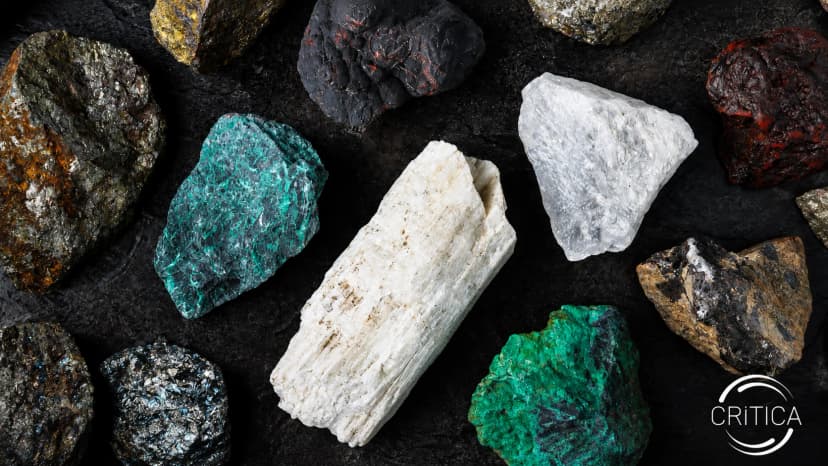
Critica (ASX: CRI): Recent Breakout Meets New Fundamental Signals From Mt Lindsay
Critica (ASX: CRI) released a Mt Lindsay Scoping Study showing a $1 billion NPV underground tin-tungsten operation, though shares eased on the day. With funding pathways still being explored, the company continues advancing its Jupiter rare earths project in parallel.
.webp&w=828&q=75)
Metallium (ASX: MTM): Texas FJH Scale-Up Advances Critical Metals Recovery
Metallium (ASX: MTM) is scaling its Flash Joule Heating technology in Texas, supported by US government funding, recent capital raising and supply agreements aimed at advancing critical metals recovery and commercialisation.
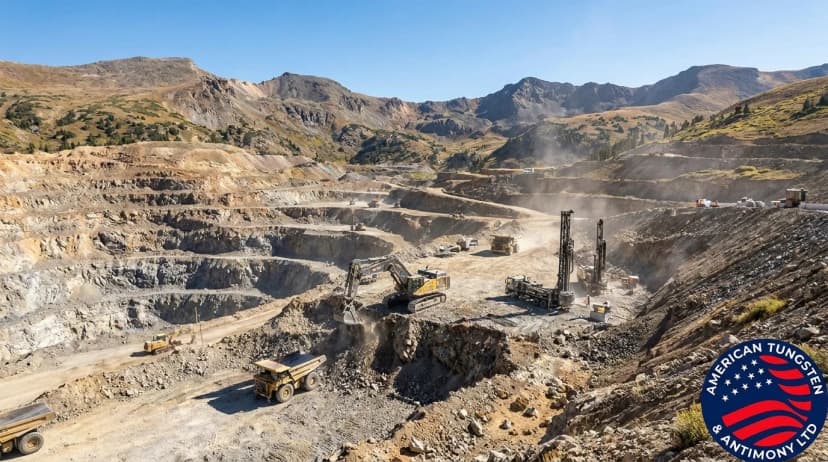
American Tungsten & Antimony (ASX: AT4): Nasdaq Filing Puts US Antimony Refinery Bet in Focus
American Tungsten & Antimony (ASX: AT4) has lodged a confidential Nasdaq filing with the SEC and extended its Del Sol refinery deal by three weeks, while shares slipped about 5% on Monday.
.webp&w=828&q=75)
Tungsten Mining NL (ASX: TGN): $50M Funding Advances Watershed Toward 2027 Production
Tungsten Mining NL (ASX: TGN) has raised $50 million to advance its Watershed tungsten project, with a reported 65.9% WO₃ concentrate grade and targeted 2027 production, positioning Tungsten’s project for its next stage of development.
.webp&w=828&q=75)
American Tungsten & Antimony (ASX: AT4): Refinery goals finally align with a key technical breakout
American Tungsten & Antimony (ASX: AT4) advances its US antimony and tungsten strategy through refinery plans, exploration results and a technical breakout setup, highlighting new project developments and potential growth opportunities.
.webp&w=828&q=75)
Larvotto Resources (ASX: LRV): Can Rising Trend Holds as Hillgrove Enters Commissioning?
Larvotto Resources enters a key operational phase as Hillgrove commissioning begins, copper expansion progresses, and the weekly chart tests important support and resistance levels while investors watch execution and future growth catalysts.
Best specialty metals stocks on the ASX: A Guide to Strategic Resources
Specialty metals stocks Specialty metals stocks sit in a corner of the market that most everyday investors don’t think about until something, like a tech boom or a supply crunch, shines a light on them. These are companies involved in producing, refining, or supplying metals that aren’t your usual steel or aluminium. Identifying the Best specialty metals stocks on the ASX involves looking beyond the surface. We’re talking about things like titanium, nickel, rare earth elements, and sometimes even exotic alloys that sound like they belong in a sci-fi lab.
This sectoral deep-dive is prepared by our senior resource analysts with over 20 years of experience in the Australian mining and global supply chain logistics.
What makes investment in the Specialty Metals Stocks attractive
Several factors contribute to the rising profile of these assets. Here are factors that make specialty metals stocks attractive for those seeking the Best specialty metals stocks on the ASX:
1. Long-Term Demand From High-Tech Industries One of the biggest reasons investors keep circling back to specialty metals is that many high-tech industries can’t function without them. Think about how often you rely on your phone, your laptop, or even the battery in your electric car. Most people don’t realise that rare earths, cobalt, and nickel quietly sit at the centre of all that. And these aren’t materials you can easily swap out for something cheaper; they’re chosen because they’ve got unique magnetic or heat-resistant properties that engineers can’t replicate with standard metals. This structural necessity is why many rare earth mining companies ASX listed have gained significant attention. Over the past decade, every new generation of devices, from thinner laptops to faster 5G phones, has actually required more specialised materials, not fewer. Even aerospace companies use titanium because it’s strong yet surprisingly light. That steady pull from so many industries creates an underlying “floor” for demand. So when you step back and look at the bigger picture, specialty metals feel less like a trend and more like a long-term backbone of modern Technology Investors like that kind of consistency; it gives the sector staying power even when the market throws curveballs.
2. Growing Momentum in Clean Energy and Electric Vehicles If there’s one megatrend reshaping the specialty metals landscape, it’s clean energy. Batteries, especially those used in electric cars, need metals like lithium, nickel, and cobalt to achieve the energy density and durability consumers expect. Many investors are now targeting critical minerals stocks Australia for green energy as a primary growth play. And while the EV revolution still has its fits and starts (anyone watching the car industry knows it isn’t a straight climb), the overall shift toward electrification seems more or less irreversible. Beyond cars, Renewable energy systems also consume a surprising amount of specialty materials. Wind turbines use rare earth magnets, solar panels rely on high-purity metals, and even the power grid requires advanced alloys to handle higher loads. Whether governments agree on climate policies or not, companies themselves have been moving toward sustainability because customers and investors now expect it. All of this creates a demand pipeline that stretches years into the future for the Best specialty metals stocks on the ASX. Specialty metal producers, especially those tied to battery supply chains, often benefit from long-term contracts or predictable buying cycles. That stability can help smooth volatility and make the sector attractive to investors who believe the energy transition still has a long way to go.
3. Limited Supply and Geopolitical Influence Specialty metals don’t just grow on trees; many come from regions where mining is complex, politically sensitive, or environmentally regulated. That gives the supply side an interesting twist. When a metal is hard to source, its price tends to respond sharply to even small changes in demand. This is a common theme for rare earth mining companies ASX listed. Investors who’ve watched nickel or rare earth prices spike after a single policy announcement know precisely what this looks like. China’s grip on rare earth processing, for example, has been a recurring theme for more than a decade. When one country controls most of the supply chain, companies elsewhere start scrambling to diversify. That usually triggers investment in new projects, Exploration , and partnerships, activities that can lift the stocks of miners or refiners tied to those metals. There’s also the simple fact that new mines take years (sometimes a decade) to develop. So even when prices rise, production can’t instantly catch up. This built-in bottleneck can create long stretches where supply remains tight, and tight supply often means stronger pricing power for producers of the Best specialty metals stocks on the ASX. It’s not the kind of dynamic you see in more oversaturated markets. For investors, that mix of scarcity and strategic importance can be compelling.
4. Increasing Use of High-Performance Alloys in Industry Industries like aerospace, Defence, and Healthcare don’t just want “strong metals.” They want alloys engineered to withstand extreme heat, high resistance, or high pressure. Many high performance metal alloys stocks Australia provides are world-class in this regard. Specialty metal companies sit right in that sweet spot. When a jet engine manufacturer needs a component that can withstand thousands of degrees without warping, they turn to high-performance alloys containing nickel, titanium, or other exotic ingredients. And once these metals are approved for a specific application, especially in regulated fields like aviation, they tend to remain in use for decades. This creates recurring revenue streams that are less cyclical than those in traditional mining. New aeroplane models, medical implants, and industrial machinery often depend on precisely formulated materials, and switching suppliers isn’t as easy as shopping for a cheaper option. With global travel picking up and defence budgets in several countries, demand for advanced alloys is getting another boost. Specialty metal companies operating in this niche sometimes enjoy higher margins and greater insulation from commodity price swings, often ranking them among the Best specialty metals stocks on the ASX.

5. Rising Corporate and Government Focus on Supply Chain Security If the last few years taught us anything, it’s that supply chains are more fragile than they look on paper. The pandemic, trade disputes, and transportation bottlenecks forced governments and companies to rethink where they source critical materials. Specialty metals appeared on several “strategic priority” lists, not just in the U.S. but also in Europe, Japan, and Australia. Why does this matter for investors? Once a material is labelled “critical,” funding tends to follow. You suddenly see grants for new mining projects, incentives for domestic processing, and partnerships aimed at reducing reliance on single-country suppliers. This provides a tailwind for the Best specialty metals stocks on the ASX. It doesn’t guarantee success for every company in the sector, but it can create more favourable conditions, more stable contracts, better infrastructure support, and, sometimes, premium pricing. There’s also a psychological element. Investors often gravitate toward sectors they perceive as essential to national security or technological independence. Specialty metals check both boxes. When you combine strategic importance with increasing transparency around global sourcing, the result is a sector that feels not just relevant today but increasingly protected by long-term policy trends, especially for critical minerals stocks Australia for green energy.
Areas for investment in the Specialty Metals Stocks on the ASX
If you’re looking at the ASX for opportunities in specialty metals stocks, here’s a breakdown of some solid subsectors and the companies in them:
Rare Earths & Critical Minerals This is one of the most talked-about corners of specialty metals in Australia. Rare earth elements (REEs) like neodymium, praseodymium, and dysprosium are crucial for everything from permanent magnets to defence systems. A standout here is Lynas Corporation Ltd (ASX ticker LYC). It’s one of the largest rare-earth producers outside China. Another: Iluka Resources Ltd (ILU). While more known for mineral sands, it’s moving into rare-earth by-products and has strategic ambitions in REEs. Many rare earth mining companies ASX listed are located within this group. Because the supply chains for these materials are under strategic pressure (geopolitics + tech demand), companies with substantial deposits and processing capabilities may benefit from premium valuations.
Nickel / Cobalt / Battery-Metals This covers metals for EVs, energy storage, and high performance metal alloys stocks Australia. On the ASX, you’ll find several nickel/cobalt plays. For example, Clean TeQ Holdings Ltd (CLQ) has a nickel-cobalt-scandium project in NSW. Also, Australian Mines Ltd (AUZ) has nickel/cobalt/scandium aspects. The demand for battery metals is still rising, though caution is warranted: many projects are early-stage or face execution risk. If a company can move from resource into production, there’s potential upside for the Best specialty metals stocks on the ASX.
Specialty Alloys / Titanium / Mineralsands-based Metals These are a bit less glamorous than “battery metals” but still important. They include companies that produce titanium, zircon, and other specialty metal products. For example, Iluka (again) is a leader in mineral sands (zircon/ilmenite) and is working on extracting rare earths from by-products. Allower profile means less hype, but if you pick a company with strong operational performance and cost control, you may find a more stable investment than “boom-or-bust” Small-Caps.
Which areas offer better opportunities? Best “money-bets” is Rare Earths & Critical Minerals subsector first. The reasons: Geopolitics favours diversification of supply chains away from China. Barriers to entry are high (processing, refining, and environmental permitting). That means fewer players, which can lead to stronger pricing power. The link to defence, high-tech and renewables gives structural demand. The Battery Metals (nickel/cobalt) group is also attractive but comes with greater risk: commodity price swings, technical/processing risks, and project delays. If you have a higher risk tolerance and want a bigger upside, this could be for you, potentially involving some of the Best specialty metals stocks on the ASX. The Specialty Alloys / Mineral Sands area is probably the most conservative of the three. If you want something less wild, more operationally mature, this may be the place. But the upside may be more limited.

How to find top-performing Specialty Metals Stocks on the ASX?
Here are factors to consider when choosing top-performing specialty metals stocks on the ASX, especially when searching for the Best specialty metals stocks on the ASX:
1. Quality of the Resource (Grade, Scale, and Geology) When you’re looking at specialty metals companies, especially miners, the starting point is always the resource itself. Think of it like house-hunting: you can fix the paint and the plumbing later, but you can’t magically move the house to a better suburb. A project’s grade (how much metal sits in each tonne of rock), its size, and the geological setting all determine whether the company has something genuinely commercial or just “nice on paper.” High-grade deposits generally cost less to mine, which is a major draw for critical minerals stocks Australia for green energy. Scale matters because larger deposits support longer mine lives, which opens doors to long-term customers. Geology also plays a role; complex ore bodies often require more expensive processing, which can erode margins. Investors sometimes get swept up by announcements about drilling results or future production targets, but the underlying resource usually tells you 70% of the story. If the geology is strong, the company has more room to survive downturns and thrive in good cycles. So start with the ground, always.
2. Management Capability and Track Record You can have the best deposit in the world, but if the team running the show has a history of cost blowouts, delays, or questionable decisions, your investment case starts to wobble. Management really is the “X-factor” in specialty metals. Mining and processing these materials is far more complex than pulling gold or iron ore out of the ground. This expertise is a hallmark of the Best specialty metals stocks on the ASX. You need people who know how to negotiate long-term offtake agreements, navigate environmental approvals, and keep massive construction projects on schedule. Pay attention to how much “skin in the game” the company have. Executives who hold meaningful shares tend to behave more like owners than employees. And in specialty metals, where production costs, technology partnerships, and geopolitics collide, you want leaders who know how to steer through turbulence, not just talk a good game. Good management doesn’t guarantee success, but poor management almost always guarantees problems.
3. Market Dynamics and Strategic Demand Outlook Specialty metals markets can be quirky. Prices don’t always move with broader commodities, and demand often hinges on fast-evolving sectors like EV batteries, electronics, and aerospace. That’s why understanding the “bigger picture” demand story is crucial for rare earth mining companies ASX listed. When a metal has strategic importance, like rare earths for defence and magnets, or nickel for batteries, it tends to enjoy more stable long-term demand and sometimes government backing. That can be a significant advantage for ASX-listed companies. Investors should also look at supply chains. Some metals have bottlenecks: processing may be dominated by one country, or global supply may rely on just a handful of mines. That kind of scarcity can strengthen pricing and give producers more leverage. But it can also create volatility. Another thing: technology trends matter. For example, battery chemistries change; aerospace alloys evolve. You want exposure to metals that are likely to remain essential, not those that could be engineered out. In short, the Best specialty metals stocks on the ASX sit at the intersection of strong current demand and credible long-term need. If several industries rely on the material, and if supply remains tight, that’s usually a promising setup for investors.
4. Financial Strength and Development Stage Specialty metals projects aren’t cheap. Companies need funding to explore, drill, build processing plants, and operate at scale. This is a critical factor for high performance metal alloys stocks Australia. So it’s crucial to assess the company’s cash position, debt levels, and its ability to raise capital without excessively diluting shareholders. A junior explorer with a great discovery but only a few months of cash left is skating on thin ice unless it has strong backers. Then there’s the question of where the company sits on the development curve. Early-stage explorers carry the most significant risk but often the biggest upside. Developers (with feasibility studies underway) are in the “proving it” phase. Producers, meanwhile, usually offer more stability because they’re already generating revenue, but may have less explosive growth. Investors should also check cost estimates versus the metal’s price. If production is costly and the commodity is in a downcycle, the business may struggle to remain profitable. Financial stability gives a company breathing room. Breathing room gives management flexibility. And flexibility offers investors a much smoother ride in the Best specialty metals stocks on the ASX. If a company can fund operations, deliver steady progress, and avoid drowning in debt, it’s far more likely to turn its resources into something valuable.
What can go wrong with investing in Specialty Metals Stocks companies?
Here are risks that can trip up investors in specialty metals stock:
1. Volatile Commodity Prices Specialty metals often move to their own rhythm, and that rhythm can be unpredictable. Prices for rare earths, nickel, or cobalt can jump or collapse almost overnight based on policy decisions, trade tensions, or even a single discovery somewhere in the world. Investors sometimes forget that even well-run producers of the Best specialty metals stocks on the ASX are at the mercy of global pricing, especially when markets are thin or concentrated. A slight change in supply from China, Africa, or South America can ripple across the entire sector. For explorers and developers, who aren’t generating revenue yet, a prolonged slump in metal prices can delay financing or even halt progress entirely. In short, you might invest in a promising company, but if the commodity cycle turns against you, timing becomes a serious risk.
2. High Capital Costs and Funding Challenges A specialty metals project rarely comes cheaply. These companies often need sizeable investment to build mines, processing facilities, or advanced refining systems. And unlike gold or copper, many specialty metals require bespoke technology, which can quickly drive up costs. This affects the profitability of critical minerals stocks Australia for green energy. A feasibility study might look attractive on paper, but the moment construction begins, unexpected expenses tend to surface. Investors run into trouble when companies rely heavily on raising fresh capital. If markets are weak, the business may need to issue shares at lower prices, diluting existing holders. Or worse, the project stalls due to a lack of funds. The risk isn’t just cost overruns; it’s whether the company can keep moving forward at all. Without strong balance sheets or credible financial partners, even promising projects can lose momentum fast for the Best specialty metals stocks on the ASX.
3. Technical and Processing Difficulties Not all rocks are created equal. Some specialty metals sit in complex ore bodies that require tricky processing methods. A company might have a world-class resource, but if it can’t extract or refine the metal efficiently, the economics unravel. This is a major concern for rare earth mining companies ASX listed. Technical risks can appear in unexpected places, such as metallurgical testing that reveals lower recoveries, pilot plants that don’t scale up, or equipment failures that cause months of delay. The thing is, investors often underestimate how much “know-how” matters in specialty metals. This isn’t like digging up iron ore. Many of these metals need chemical separation, high-purity refining, or innovative engineering solutions. If the team can’t crack the technical puzzle or if costs rise too much, the project may never reach profitable production. Technical uncertainty is one of the most underestimated risks in this space.
4. Geopolitical and Supply-Chain Exposure A surprising number of specialty metals depend on supply chains that pass through politically sensitive regions or countries with tight export controls. Rare earths, for example, are heavily concentrated in China, and any shift in policy can jolt global prices. Similarly, cobalt has well-known ties to the Democratic Republic of Congo, a nation with ongoing political and social challenges. These external factors can dramatically affect ASX-listed companies, even if their own operations are stable. Processing is another bottleneck: some metals can be refined at only a handful of facilities worldwide. If trade tensions flare or new tariffs are imposed, companies might face higher costs or logistical roadblocks. It’s the kind of risk investors don’t see on a balance sheet but feel directly in share price volatility for the Best specialty metals stocks on the ASX. A project can look great geologically and financially, yet still suffer because of events happening on the other side of the world.
5. Environmental, Regulatory, and Community Concerns Mining, especially specialty metals mining, faces increasing scrutiny from regulators, environmental groups, and local communities. This is particularly true for critical minerals stocks Australia for green energy. It’s not unusual for a promising project to hit a wall because of permitting delays, environmental impact disputes, or local resistance. These issues can drag on for years, adding uncertainty and cost. Sometimes investors underestimate how sensitive specialty metal projects are to water use, land disturbance, or chemical processing requirements. A single negative environmental assessment can derail what looked like a straightforward timeline. Even when a company has strong intentions, failing to manage community relationships can lead to protests or legal challenges. And regulations evolve, what’s acceptable one year might require additional compliance the next. For investors, this means higher costs, slower development, and the possibility that a project never clears its hurdles, even for the Best specialty metals stocks on the ASX. It’s a risk that rarely gets the spotlight but can make or break an investment.

FAQs on Investing in Specialty Metals Stocks
Which stocks are referred to as Specialty Metals Stocks? They’re companies that produce or supply metals such as rare earths, nickel, cobalt, and titanium, as well as other high-performance or hard-to-source materials. These stocks often sit in sub-sectors tied to tech, clean energy, aerospace, and advanced manufacturing. Many are searched as the Best specialty metals stocks on the ASX.
What makes Specialty Metals Stocks attractive? Demand is driven by long-term trends such as EVs, clean energy, and high-tech manufacturing, which are fuelling steady structural growth in the sector. This creates a strong environment for critical minerals stocks Australia for green energy. Limited supply, geopolitical importance, and rising focus on supply-chain security can boost pricing power and investor interest.
What are some of the high-risk factors associated with investing in Specialty Metals Stocks? Commodity price swings, high capital costs, and technical processing challenges can quickly hit profitability or delay projects. Geopolitical exposure, regulatory hurdles, and community or environmental concerns also create unpredictable risks. Identifying rare earth mining companies ASX listed with robust risk management is essential.
Why are these considered "strategic" metals? Because of their essential role in national security, defence, and the global transition to sustainable energy, these metals are often subject to government grants and incentives, supporting the value of high performance metal alloys stocks Australia in the long term.