

Mining

Caprice Resources (ASX: CRS): Valuing the Gold Before It Becomes a Resource
Caprice Resources (ASX: CRS) is an exploration-stage gold company focused on Western Australia’s Murchison Goldfields. Its Island Gold Project is advancing toward a maiden MRE, supported by high-grade drilling, while valuation remains highly dependent on exploration success and future resource definition.
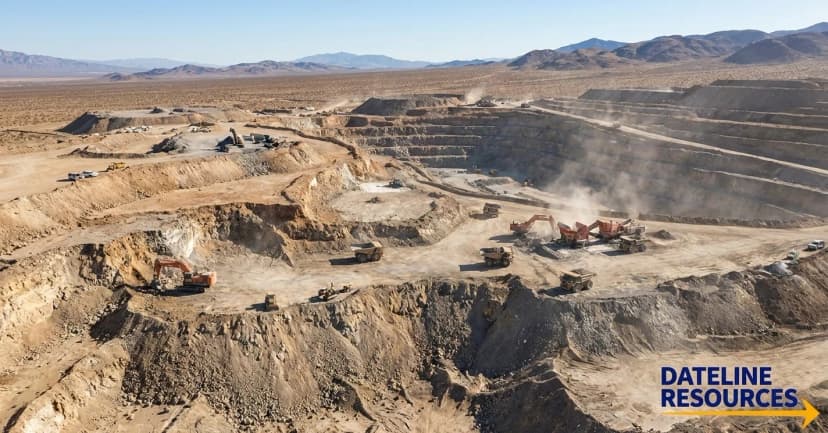
Dateline Resources (ASX: DTR): National Security Case Gives Colosseum Rare Earths Bid New Life
Dateline Resources (ASX: DTR) has gained US Department of War backing in its bid to restart Colosseum, a gold and rare earths project in California, as a key court hearing nears.
Critica (ASX: CRI): Recent Breakout Meets New Fundamental Signals From Mt Lindsay
Critica (ASX: CRI) released a Mt Lindsay Scoping Study showing a $1 billion NPV underground tin-tungsten operation, though shares eased on the day. With funding pathways still being explored, the company continues advancing its Jupiter rare earths project in parallel.
.webp&w=828&q=75)
Metallium (ASX: MTM): Texas FJH Scale-Up Advances Critical Metals Recovery
Metallium (ASX: MTM) is scaling its Flash Joule Heating technology in Texas, supported by US government funding, recent capital raising and supply agreements aimed at advancing critical metals recovery and commercialisation.
.webp&w=828&q=75)
Northern Star Resources (ASX: NST): A$38.7B Gold Fields Bid Rejected as Elliott Pressure Builds
Northern Star Resources (ASX: NST) has rejected Gold Fields’ A$38.7 billion takeover proposal amid increased pressure from Elliott Investment Management and leadership changes, while continuing to advance KCGM expansion, Hemi development, and its long-term growth strategy.
.webp&w=828&q=75)
EAU Lithium (ASX: EAU): New Identity and DLE Partnerships Advance Bolivia Lithium Development
EAU Lithium (ASX: EAU) has rebranded from Cosmos Exploration and secured DLE technology and project execution agreements to advance lithium projects in Bolivia and establish a framework for future project development.
Investing in ASX Mining Stocks: A Complete Guide
What are Mining Stocks? Mining Stocks refer to shares in companies that explore, extract, process, or market natural resources, from metals and minerals to energy commodities. The sector includes sub-sectors such as iron ore and metallurgical coal, precious metals (gold, silver), battery and critical minerals (lithium, nickel, rare earths), uranium, and junior explorers seeking new resource discoveries.
The ASX is uniquely rich in mining exposure: it hosts major producers like BHP and Rio Tinto and dozens of smaller junior explorers focused on critical minerals and rare earth elements. Australian mining firms play a significant role globally, supplying essential inputs for infrastructure, energy, and green technologies, making mining stocks in Australia a vital and dynamic segment of the national market.

What Makes Investment in Mining Stocks Attractive?
The reasons that make investing in ASX Mining Stocks an attractive investment include:
1. Exposure to Global Commodity Cycles
Mining stocks often rise with global commodity demand, particularly from infrastructure, manufacturing, and energy sectors. ASX listed iron ore giants like BHP and Rio Tinto are highly sensitive to demand from China, the world’s largest steel producer. Commodity price recoveries, driven by global economic rebounds, can sharply boost revenues and investor sentiment. This cyclical upside positions mining stocks as potential leaders during economic upturns, offering investors strong growth potential when global demand for raw materials surges.
2. Strategic Role in Energy Transition
ASX firms play key roles in the global shift to clean energy. Minerals like lithium, nickel, copper, and rare earths are critical to electric vehicles, batteries, and renewable infrastructure. Companies such as Pilbara Minerals, Lynas Rare Earths, and Boss Energy are at the forefront of supplying these materials. As demand for sustainable energy solutions escalates, mining firms with exposure to these critical resources stand to benefit from long-term structural tailwinds and investment demand.
3. Inflation Hedge and Dividend Income
Minerals inherently hold tangible value, making mining stocks an effective hedge against inflation. Oftentimes, companies benefiting from higher commodity prices pass on gains through substantial dividend payouts, as seen with ASX major miners known for shareholder rewards. This combination of real-asset exposure and income generation makes mining stocks compelling for investors seeking inflation protection and yield.
4. Access Across the Mining Lifecycle
The ASX offers a broad spectrum of mining investment options, from Australia's small cap ASX mining stocks (junior explorers), where success can yield explosive returns, to majors like BHP and Rio with stable, diversified production bases. This market depth level lets investors tailor exposure based on risk tolerance and investment horizon, offering potential for capital growth and defensive positioning.
5. Capital-Raising Strength and Infrastructure Investment
Australia attracts significant mining-related capital, with the ASX playing a key role in listing junior developers and project funding, even for foreign companies, driven by the country’s deep pension fund pools and regulatory stability. This capital readiness enables mining ventures to scale and develop projects efficiently, enhancing growth opportunities and market dynamism.
A List of Mining Companies in Australia (By Sector)
Australia’s mining landscape is rich and varied. Let’s zoom into several sub-sectors and their standout ASX-listed players. This serves as a high level list of mining companies in Australia to watch:
1. Iron Ore and Large Diversified Miners
BHP (ASX: BHP) and Rio Tinto (ASX: RIO) dominate this category. They supply iron ore, copper, and other key metals. With efficient Pilbara operations, these giants leverage low production costs to deliver strong margins despite price fluctuations. Their sheer scale makes them bellwethers for the sector, often influencing broader market trends.
2. Gold and Precious Metals
Gold miners like Bellevue Gold and West African Resources continue to benefit from gold’s enduring role as a safe-haven asset amid elevated geopolitical and economic uncertainty. Australia remains a significant gold producer in 2025 and into 2026, with output estimated at 320 metric tonnes, powered by high-tech mining operations and strong investor demand. Meanwhile, mining profitability remains robust: the average all-in sustaining cost (AISC) across Australia and New Zealand reached A$2,278/oz, with standout low-cost producers such as Ramelius Resources delivering AISC around A$1,551/oz and achieving record annual gold production of 301,664 ounces. On the revenue side, spot gold prices in 2025 have surged into the US$3,400-range, reinforcing profitability for well-positioned Australian miners.
3. Critical Minerals: Lithium, Rare Earths, Uranium
The energy transition has elevated demand for batteries and rare earth metals. Pilbara Minerals and Liontown Resources lead lithium production; Lynas Rare Earths is pivotal for non China rare earth supply. Boss Energy represents growing interest in uranium amid surging demand for nuclear energy. These subsectors offer thematic growth tied to clean energy and EV adoption.
4. Battery Metals and Junior Explorers
Companies like Kaili Resources (rare earths-focused) and iTech Minerals (graphite, copper, gold) are speculative plays with high upside, but considerable volatility. These juniors often see explosive price action following drilling milestones and project approvals, reflecting exploration's high-risk, high-reward nature.
5. Uranium and Emerging Commodities
Boss Energy taps into renewed interest in nuclear power. The uranium sector benefits from global shifts toward energy security and decarbonization, offering a compelling growth opportunity in an often overlooked commodity class.

How to Find Top-Performing Mining Stocks on the ASX
Here is what you should consider to find top-performing Mining Stocks on the ASX:
1. Commodity Exposure and Market Dynamics
First, assess what commodity the company relies on: iron ore, lithium, gold, or rare earths? Understand price cycles, demand trends, and geographic demand centres like China. Mining stocks are cyclically sensitive, so alignment with robust commodity fundamentals matters.
2. Cost Efficiency and Operational Performance
Mining firms that maintain low production costs (All-In Sustaining Cost or AISC) ensure resilience in downturns and the ability to sustain profitability when prices slide.
3. Project and Financial Strength
Evaluate the company’s capital base and access to funding. Australia's strong secondary listing environment and pension capital availability mean firms with credible project pipelines and good governance are better positioned to attract investment and scale effectively.
Expert Note: When analyzing mining stocks, the Proactive Equities team places immense focus on AISC (All-In Sustaining Cost) and project permitting. A company might have a great resource, but if its costs are too high or its permits are stuck in regulatory limbo (a growing risk in Australia), it's a high-risk investment. Our recommendations filter for companies that demonstrate operational efficiency and clear, de-risked paths to production.
4. Exposure to Growth Commodities and Innovation
Consider companies focused on future facing commodities tied to electrification and green technologies, like copper, lithium, rare earths, and uranium. Their long-term potential stands out amid global decarbonization and infrastructure trends.
What are the Risks of Investing in Mining Stocks?
The risks involved in investing in Mining companies include:
1. Commodity Cyclicality
Mining stocks swing dramatically with commodity cycles. When prices peak, valuations soar; when they fall, earnings quickly retreat. For investors, timing and sector insight are crucial. Buying during peaks can lead to losses, while entering troughs requires patience and confidence in recovery. Recognising this cyclical nature helps manage expectations and encourages disciplined strategies, such as identifying structural supply constraints or exploring companies with defensive costs.
2. Regulatory and Permitting Delays
Regulatory hurdles and permitting delays have increasingly dented Australia’s competitiveness in mining. The Fraser Institute’s 2024 survey showed that all Australian jurisdictions plummeted in the global investment attractiveness rankings. Western Australia tumbled from 4th to 17th place, as investors cited unpredictable policy, regulatory duplication, and land access uncertainties as key deterrents. In some states, average approval timelines stretching to two years create financing and operational uncertainty. These delays can cripple project economics, stall production, and undermine investor confidence, especially for resource-intensive ventures with tight development timelines. The result: even projects with solid fundamentals can be derailed if permitting becomes a bottleneck, adding a layer of policy risk that’s hard to model but impossible to ignore.
3. Exploration and Execution Risk
Junior mining companies, driven by exploration wins and project milestones, bear high execution risk. These firms often rely on speculative capital; an unsuccessful drilling campaign or postponed development can lead to sharp investor erosion. Kaili Resources is such a case, which surged 427% in a week following positive drilling updates, before sharply retracing. Success-driven surges are exciting, but reversals are equally brutal. For investors, understanding the distinction between exploration excitement and solid execution is vital. Only projects with viable geology, solid management, and clear funding paths can cross the chasm to long-term value creation; without this, capital can vanish as fast as the initial excitement.
4. Commodity Price Collapse
Even critical minerals tied to high growth trends are not immune to sharp price collapses. Energy-transition metals, like lithium, cobalt, and rare earths, are particularly volatile due to concentrated supply and low market liquidity. A recent study on energy transition metals highlighted significant heterogeneity and unpredictability in price dynamics. Two significant issues drive this: sudden oversupply (e.g., new mine ramp-ups) and demand shocks (like EV market slowdowns). When prices crash, projects that appeared profitable can become unviable. This harsh reality means investors must look beyond demand narratives to assess break-even costs and market elasticity. Companies riding the clean-energy wave can get stranded if pricing falls below sustainable thresholds.
5. Capital Intensity and Financial Strain
Mining is capital-intensive, demanding vast exploration, development, and infrastructure funding. Without robust financial buffers or stable access to capital, companies are vulnerable to cost overruns, delays, or changing economic conditions. Australia’s strength in listing mining ventures sits alongside rising funding risks when market sentiment shifts. When commodity cycles calm, credit tightens, and juniors struggle to refinance or raise equity, potentially leading to dilutive capital raises or bankruptcies. Even established players feel the pinch when commodity revenue streams falter. For mining investors, assessing a firm’s financial flexibility, debt levels, cash flow resilience, and cost control is as essential as the geology or commodity narrative.
Conclusion: Should You Be Investing in ASX Mining Stocks?
Investing in ASX Mining Stocks offers a direct line to global economic growth, the energy transition, and potential inflation hedging. From the scale of major iron ore producers to the high-growth potential of Australia's small cap ASX mining stocks in the lithium and rare earth space, the sector is diverse. However, as this guide has shown, it is a high-risk, high-reward endeavour. Success demands a sharp focus on commodity cycles, production costs (AISC), and navigating significant regulatory hurdles.

FAQs on Investing in Mining Stocks
Which stocks are referred to as Mining Stocks?
These include companies that mine, explore, process, or market commodities such as metals, minerals, and energy resources in the precious, base, and critical metal sectors.
What makes investment in Mining Stocks attractive?
They offer exposure to cyclically rising commodity demand, strategic importance in global supply chains, inflation protection, dividend potential, and diversified entry points, from juniors to majors.
What are some of the high-risk factors associated with investing in Mining Stocks?
Risks include volatile commodity cycles, regulatory delays, speculative junior exploration, price crashes, and heavy capital requirements.